


TL;DR:
- Mindful drinking emphasizes intentional awareness of when, where, why, and how much to drink.
- Cannabis-infused beverages can significantly reduce alcohol consumption and support harm reduction.
- Strategies like tracking drinks and planning ahead promote sustainable, flexible moderation and healthier habits.
You don’t have to choose between drinking everything and drinking nothing. That all-or-nothing mindset keeps a lot of people stuck, convinced that real change is only possible through complete abstinence. But mindful drinking offers a smarter, more sustainable path: intentional awareness of your consumption, focused on the when, where, why, and how much, so you stay in control without white-knuckling it. And now, with cannabis-infused beverages backed by emerging research, there’s a genuinely exciting modern tool to support your journey.
Table of Contents
- What is mindful drinking?
- Key mindful drinking strategies and frameworks
- Mindfulness and health: Beyond drinking less
- Substituting alcohol with cannabis beverages: Evidence and best practices
- Why mindful drinking isn’t just about rules—and the surprising power of alternatives
- Start your mindful drinking journey with creative alternatives
- Frequently asked questions
Key Takeaways
| Point | Details |
|---|---|
| Intentional awareness | Mindful drinking means noticing why, when, and how much you drink to stay healthy. |
| Effective strategies | Tools like tracking apps, drink pacing, and eating with drinks make moderation work. |
| Health benefits | Reducing alcohol mindfully improves sleep, mental clarity, and overall well-being. |
| Cannabis beverage option | Replacing some drinks with cannabis-infused beverages can help cut down alcohol use. |
| Know your limits | Mindful drinking is not for everyone—recognize when abstinence or professional help is safer. |
What is mindful drinking?
Mindful drinking isn’t about swapping cocktails for sparkling water and calling it a win. It’s a real, conscious practice rooted in awareness. Think of it as pressing pause before you pour, checking in with yourself, and making an intentional choice rather than running on autopilot.
According to mindful drinking principles, the practice focuses specifically on when, where, why, how much, and how quickly you drink. That awareness alone can interrupt deeply ingrained habits that happen without you even noticing.
“Mindful drinking is not about perfection. It’s about bringing conscious attention to your choices so that drinking becomes intentional, not reactive.”
Here’s what makes mindful drinking distinct from just “cutting back”:
- It’s proactive, not reactive. You plan your approach before social situations, not after you’ve already had three drinks.
- It addresses the why. Are you drinking because you’re anxious? Bored? Celebrating? That self-knowledge changes everything.
- It allows for flexibility. You don’t have to say no forever, just no right now, or no to the third drink.
- It builds new neural habits over time. Every conscious choice reinforces a healthier pattern.
The health benefits of reducing intake through mindful drinking include better liver function, improved sleep quality, and sharper mental clarity. These aren’t minor perks. Alcohol disrupts REM sleep cycles and elevates liver enzymes even at moderate levels, so reducing your intake consistently pays off faster than most people expect.
One important nuance: mindful drinking isn’t the right tool for everyone. People with physical dependence on alcohol, or those who use alcohol to self-medicate emotional pain, may need professional support and possibly abstinence rather than moderation. That’s not a judgment; it’s just smart, honest advice.
Want to dig deeper into how alcohol and cannabis compare from a health standpoint? Our cannabis vs alcohol insights piece breaks it down in a really accessible way.
Key mindful drinking strategies and frameworks
Understanding the concept is one thing. Practicing mindful drinking takes specific, evidence-backed approaches that you can actually use tonight at a dinner party or on a lazy Sunday afternoon.
Here are the core strategies, ranked from easiest to more structured:
- Track your drinks. Use an app or even just your phone’s notes. Seeing the number in real time makes abstract limits feel concrete and personal.
- Pace yourself intentionally. The general guidance is one drink per hour, which allows your body to metabolize alcohol without blood alcohol levels spiking.
- Eat before and during. Food slows alcohol absorption dramatically, giving your brain more time to register what you’ve had.
- Identify and sidestep emotional triggers. Stress, boredom, and social anxiety are the three most common reasons people drink more than they planned.
- Plan your transportation. Deciding ahead of time that you’re driving, biking, or taking a rideshare removes a huge temptation to keep drinking past your limit.
- Use breathalyzer apps or personal devices. Real-time feedback on your BAC (blood alcohol concentration) can be genuinely eye-opening. Many people underestimate how affected they are.
These key methodologies are practical, low-tech, and immediately applicable.
Pro Tip: Combine a drink-tracking app with a “drinking plan” you write out before social events. Decide how many drinks you’ll have, what you’ll switch to after that, and what your exit strategy is. This kind of pre-commitment dramatically increases follow-through.
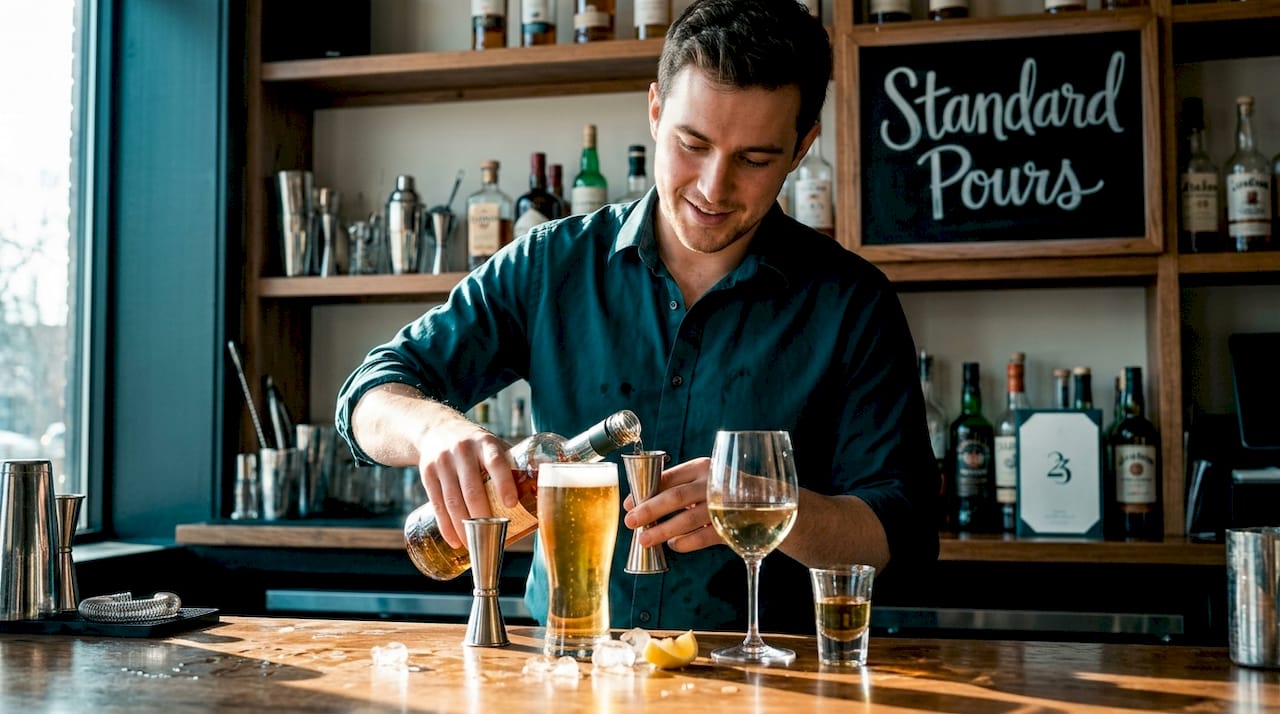
Now let’s talk numbers. The NIAAA defines low-risk drinking as follows:
| Group | Daily limit | Weekly limit |
|---|---|---|
| Women | 1 standard drink | 7 standard drinks |
| Men | 2 standard drinks | 14 standard drinks |
And a standard drink is more specific than most people realize:
| Beverage | Serving size | ABV |
|---|---|---|
| Beer | 12 oz | 5% |
| Wine | 5 oz | 12% |
| Spirits | 1.5 oz | 40% |
Those pours are probably smaller than what you get at a bar. A generous restaurant pour of wine is often 6 to 7 ounces, which means you can hit your “one drink” limit in a glass and a half. Knowing this helps you calibrate realistically.
Pairing these strategies with a broader understanding of how cannabis beverages fit into drink trends gives you a richer picture of your options.
Mindfulness and health: Beyond drinking less
It’s not just about the drinks. Mindfulness as a broader practice can genuinely transform your relationship with cravings, emotions, and stress, which are the invisible engines behind most drinking habits.
Research on mindfulness-based interventions like MBSR (Mindfulness-Based Stress Reduction) and MORE (Mindfulness-Oriented Recovery Enhancement) shows measurable reductions in depression, anxiety, and substance cravings among people with substance use challenges. The effect sizes are real: one meta-analysis found a medium effect for PTSD symptoms (SMD=0.41), which signals that these practices do more than just scratch the surface.
“Awareness interrupts autopilot. The moment you observe a craving without acting on it, you’ve already changed your relationship to it.”
Here’s what a mindfulness-supported approach to drinking reduction might look like in practice:
- Daily check-ins. Before pouring a drink, take 60 seconds to notice your mood, your physical state, and your motivation.
- Structured breathing exercises. Even five minutes of focused breath before a social event can reduce anxiety-driven drinking significantly.
- Journaling triggers. Writing down what prompted a craving helps you recognize patterns you’d otherwise miss.
- Guided programs. Tools like NIAAA’s Rethinking Drinking offer structured, research-supported frameworks for planning change and building motivation.
- Group or community support. Whether it’s a sober-curious online community or a wellness-focused friend group, social accountability is powerful.
Pro Tip: You don’t need to meditate for an hour to get results. Even a two-minute body scan before reaching for a drink, where you mentally scan from head to toe noticing tension, fatigue, or emotion, can interrupt the automatic reach-for-a-drink response.
The goal here isn’t to turn drinking into a clinical exercise. It’s to build enough awareness that your choices feel free and considered, rather than forced by habit or stress.
Substituting alcohol with cannabis beverages: Evidence and best practices
With strategies in place, let’s explore one of the most promising modern approaches: cannabis-infused beverages as a genuine, enjoyable alternative to alcohol in social settings.
The research is catching up to what many sober-curious drinkers have already discovered. A University at Buffalo study found that cannabis beverage users reduced their weekly alcohol consumption from an average of 7.02 drinks down to 3.35 drinks. That’s more than a 50% reduction. And 62.6% of participants either significantly reduced or completely stopped their alcohol intake during the study period.
Even more interesting: the people who substituted most successfully tended to have lower levels of negative emotionality and impulsivity. In other words, they weren’t just swapping one substance for another mindlessly; they were making intentional, wellness-oriented choices.
Here’s a quick comparison to help frame the two options:
| Factor | Alcohol | Cannabis beverages |
|---|---|---|
| Caloric content | High (7 cal/gram) | Generally lower |
| Hangover risk | Yes | Minimal to none |
| Liver impact | Significant over time | Not liver-processed the same way |
| Social acceptability | Widely accepted | Growing rapidly |
| Onset time | Fast (minutes) | 15 to 45 minutes |
| Craving reduction | No | Emerging evidence yes |
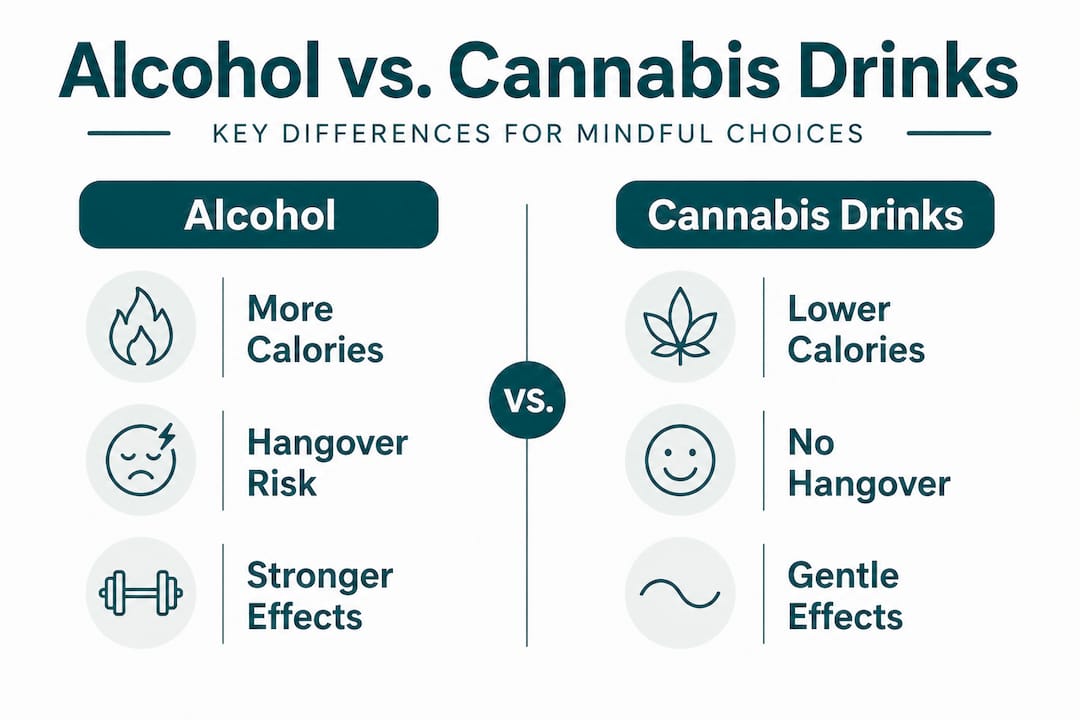
According to harm reduction research, cannabis beverages enable harm reduction through substitution in social settings, particularly for low-risk drinkers who are motivated to change. The key phrase here is “low-risk phenotype.” People who tend toward high impulsivity or who use alcohol primarily to cope with emotional pain may not benefit from substitution and may need more intensive support.
The key benefits people report with cannabis beverage substitution include:
- Social ease without the hangover. Many users describe a lighter, more present feeling compared to alcohol-induced sedation.
- Improved emotional balance. The study noted lower negative emotionality among substituters, suggesting a gentler impact on mood.
- Caloric reduction. Swapping a craft beer or cocktail for a low-calorie cannabis beverage trims intake meaningfully over time.
- No “next day” effect. For many people, the absence of hangover anxiety is itself a major quality-of-life improvement.
Important note: Co-use (drinking alcohol AND consuming cannabis beverages together) carries its own risks, including amplified impairment and reduced ability to gauge your state. Mindful drinking principles apply just as much to cannabis as they do to alcohol. Not suitable for those with physical dependence, certain medications, or patterns of emotional self-medication.
Explore more about how alternative beverages support wellness and check out what’s ahead in THC beverage trends to see where this exciting space is heading.
Why mindful drinking isn’t just about rules—and the surprising power of alternatives
Here’s an honest take that most wellness articles skip: tracking drinks and memorizing NIAAA limits are useful, but they won’t get you very far if the deeper pull toward alcohol stays untouched.
Real, lasting change in your drinking habits comes from two places. First, honest self-reflection about what drinking is doing for you emotionally and socially. Second, finding alternatives that are genuinely enjoyable, not just “better than nothing.” This is where so many moderation attempts fizzle out. People white-knuckle through social events with plain sparkling water, feel left out, and eventually conclude that moderation is too hard.
Cannabis beverages change that equation entirely. They give you something to hold, something to sip, something that creates a social and sensory experience without the alcohol. They aren’t a deprivation tool; they’re an upgrade. Bringing a chilled, bright cannabis sparkling drink to a party or gathering feels cool and intentional, not like you’re sitting out.
The other piece that often gets ignored is self-compassion. You will have nights where you drink more than planned. That doesn’t erase your progress. Rigid all-or-nothing thinking is the enemy of sustainable change. Flexible, curious, self-aware drinking, where you notice what happened and adjust without shame, is what actually builds momentum.
Community matters too. Surrounding yourself with people who are at least open to sober-curious living, or who celebrate non-alcoholic options, makes a bigger difference than any app or framework. You’re not just changing a habit; you’re gently reshaping a social identity. That takes time, experimentation, and the willingness to try something new with an open mind.
Start your mindful drinking journey with creative alternatives
Ready to make your next move? Mindful drinking works best when you have genuinely enjoyable alternatives waiting in the wings, not just willpower.
At 23rd State, we believe that wellness and good vibes aren’t mutually exclusive. Our curated lineup of hemp-derived cannabis beverages and infused products is designed for exactly this kind of intentional lifestyle shift. Whether you’re sober-curious, cutting back, or just looking to add a fresh, low-key option to your social rotation, we’ve got something bright and satisfying waiting for you. Visit 23state.com to explore our full range, and check out our deep dive into the future of cannabis beverages to see where this space is headed next. Your mindful drinking journey starts with one intentional sip.
Frequently asked questions
Is mindful drinking safe for everyone?
Mindful drinking is not suitable for everyone, particularly people with physical dependence on alcohol, those on certain medications, or those using alcohol to manage emotional pain, who may need abstinence and professional support instead.
How do I know if I’m practicing mindful drinking well?
You’re on the right track when you consistently pause before drinking decisions and can clearly articulate why, when, and how much you’re choosing to drink rather than reacting to habit or social pressure.
Can cannabis-infused beverages completely replace alcohol?
For many social drinkers, yes. A University at Buffalo study found over 62% of cannabis beverage users reduced or stopped alcohol use, though co-use risks remain and substitution isn’t appropriate for everyone.
What is a standard drink according to NIAAA?
A standard drink equals 12oz beer at 5% ABV, 5oz wine at 12% ABV, or 1.5oz spirits at 40% ABV, with low-risk limits set at one per day for women and two per day for men.
Which mindful drinking strategies work best for beginners?
Start with the basics: track your drinks, pace yourself at one drink per hour, eat food while drinking, and plan your transportation ahead of time to remove temptation and stay in control.
Recommended
- Cannabis vs. alcohol: health, social, lifestyle insights | 23rd State
- Sip and Chill: How Cannabis Beverages Are Changing the Way We Drink – 23rd State
- Discover alternative beverages for wellness and enjoyment | 23rd State
- Sipping Smarter: Recognizing the Potential Benefits of THC Drinks – 23rd State