


TL;DR:
- Hemp blunts are cigar-like rolls with hemp wraps containing non-psychoactive hemp products, offering a tobacco-free alternative. Their effects depend on the inside material, and they generally burn slower, providing a smoother experience. Legality varies by state, and choosing high-quality, lab-tested hemp enhances wellness and ensures safety.
Walk into any smoke shop or scroll through any hemp-focused community right now, and you’ll find hemp blunts everywhere. Yet ask five different people what a hemp blunt actually is, and you’ll get five different answers. Are they the same as CBD blunts? Do they get you high? Are they even legal where you live? These are fair questions, and the confusion is real. This guide cuts through all of it, giving you clear definitions, a practical rolling walkthrough, honest experience insights, and the legal facts you actually need before you spark one up.
Table of Contents
- What is a hemp blunt?
- How hemp blunts are made and rolled
- How hemp blunts affect your experience
- Legal facts: Hemp blunts and the law
- The wellness angle: What most guides don’t address
- Explore premium hemp: Take the next step
- Frequently asked questions
Key Takeaways
| Point | Details |
|---|---|
| Hemp blunt basics | A hemp blunt pairs cannabis or hemp flower with a tobacco-free hemp wrap for a cleaner experience. |
| Rolling technique matters | Consistent packing and proper sealing are crucial for a slow, even burn in hemp blunts. |
| Flavor and burn benefit | Hemp wraps deliver a more natural taste and slower burn compared to traditional blunts. |
| Legal status varies | Hemp blunts are not legal in all U.S. states; always check local regulations. |
| Wellness approach | Choosing quality hemp wraps and mindful blends reflects a growing wellness-conscious trend. |
What is a hemp blunt?
Now that we’ve set the stage, let’s clarify what a hemp blunt really is and how it differs from standard blunts.
At its core, a blunt is a cigar-style roll. Traditionally, that means ground cannabis or tobacco wrapped in a cigar leaf or tobacco-based wrap. A hemp blunt flips one key variable: the wrap itself. A hemp blunt is essentially a blunt-style roll where ground hemp-derived cannabis is smoked inside a hemp wrap, a tobacco-free alternative wrapper made from hemp plant fiber rather than tobacco leaf.
That distinction matters more than it might seem at first. The wrap is not just a delivery vehicle. It affects flavor, burn quality, what goes into your lungs, and even your legal standing depending on where you live.
Here’s where a lot of the confusion comes from:
- Some people use “hemp blunt” to mean a blunt rolled in a hemp wrap, regardless of what’s inside (could be cannabis, hemp flower, or a blend)
- Others use it to mean a blunt containing only legal hemp flower inside a hemp wrap
- A smaller group uses it interchangeably with “CBD blunt,” which is a related but separate concept
The clearest definition: a hemp blunt uses a hemp wrap (not tobacco), and the wrap itself carries no psychoactive cannabinoids. What’s inside determines your experience. For adults who want to explore hemp for recreation or wellness, that inside-outside distinction is the foundation of everything.
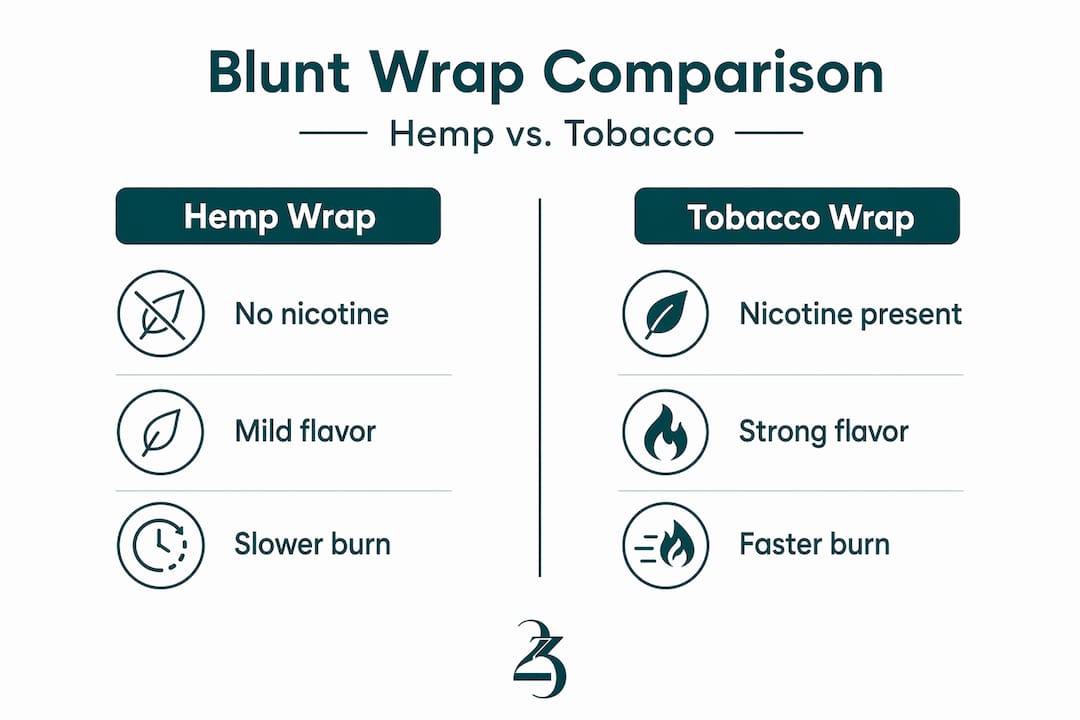
Hemp blunt vs. traditional blunt: quick comparison
| Feature | Traditional blunt | Hemp blunt |
|---|---|---|
| Wrap material | Tobacco leaf or cigar paper | Hemp plant fiber |
| Nicotine in wrap | Yes | No |
| Flavor profile | Rich, tobacco-heavy | Natural, earthy, mild |
| Burn rate | Medium to fast | Slower, cooler |
| Legal complexity | Based on contents | Based on wrap + contents |
| Wellness appeal | Lower (tobacco present) | Higher (tobacco-free) |
The wellness case for hemp wraps is straightforward. No tobacco means no nicotine exposure from the wrap itself. For health-conscious adults who want a cleaner, more intentional experience, that’s not a small thing.
How hemp blunts are made and rolled
After understanding the definition, it’s helpful to know exactly how a hemp blunt is made and rolled for ideal use.
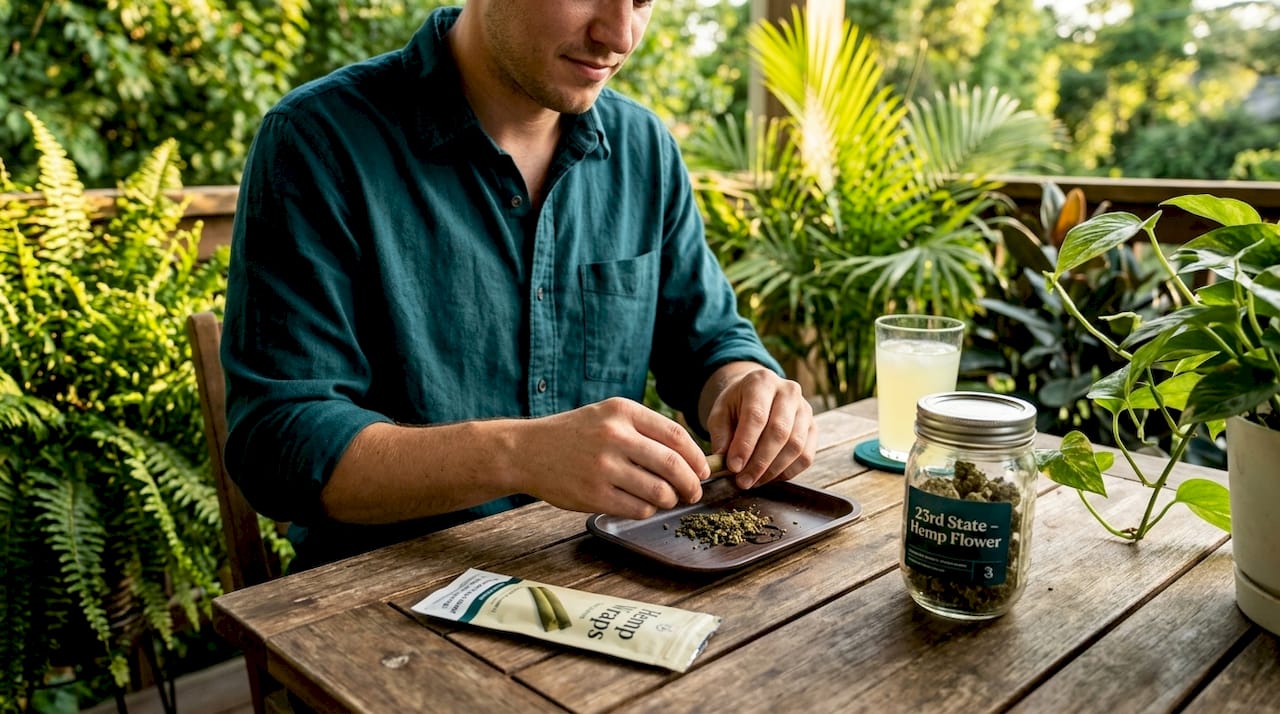
Rolling a hemp blunt follows the same overall method as a blunt: prepare the wrap, grind and fill evenly, roll into a cylinder, and seal the seam. But the nuances inside each step make a real difference in burn quality and overall experience.
Here’s the step-by-step process:
-
Prep your material. Grind your hemp flower or cannabis to a medium-fine consistency. Not too powdery (it’ll burn too fast and clog the wrap), not too chunky (air pockets will cause uneven burning). Consistent grind is your best friend here.
-
Lay the hemp wrap flat. Most hemp wraps come slightly moist to keep them pliable. If yours feels dry or stiff, breathe a little warm air onto it or run a barely damp finger along the edges before filling.
-
Distribute your fill evenly. This is where most beginners go wrong. A thin, consistent line of material along the length of the wrap gives you control. Too much at the ends and not enough in the middle creates a “banana” shape that burns unevenly.
-
Roll and shape. Tuck and roll with gentle, even pressure. Think of it like shaping clay: firm enough to hold structure, loose enough to allow airflow. If you pack it too tight, you’ll restrict draw and it’ll be frustrating to smoke.
-
Seal the seam. Hemp wraps typically seal with moisture. Lick or lightly wet the edge and press firmly with your fingers, working from the center outward to push out air bubbles. Some rollers use a lighter to gently heat the seam after sealing, but go easy. Too much heat warps the wrap.
-
Let it rest for 30 to 60 seconds. Once sealed, hold it upright and let the moisture set before lighting.
Pro Tip: Even packing and correct sealing are the two biggest factors in burn quality. Uneven density creates hot spots or canoeing (one side burns faster than the other, ruining the whole roll). Pack in gentle layers rather than stuffing all at once.
“The difference between a blunt that burns smooth to the end and one that canoes at the halfway mark almost always comes down to how evenly you packed it in the first place.”
Common mistakes to avoid:
- Air leaks at the ends. Twist or fold the tip before lighting to prevent air from rushing through unevenly.
- Overfilling. More material does not mean a better blunt. It means a harder draw and an uneven burn.
- Dry wrap. A dry hemp wrap cracks when you roll it, creating gaps in the seam and in your smoking experience.
If you’re newer to hemp products overall and want context on choosing hemp for wellness, understanding rolling technique is just one piece of the puzzle. What you fill it with matters just as much.
How hemp blunts affect your experience
With a hemp blunt in hand, it’s natural to wonder how the experience compares. Here’s what you can actually expect.

Flavor is the first thing most people notice. Traditional tobacco wraps carry a bold, sometimes sharp overlay that competes with whatever’s inside. Hemp wraps are more neutral and grassy, letting the natural terpene profile of your flower come through. If you’ve ever smoked high-quality flower and wanted to actually taste it, a hemp wrap is a better canvas.
Burn characteristics are genuinely different too. Hemp wraps tend to burn slower and at a lower temperature than tobacco wraps. That means a longer, more gradual experience rather than a fast, hot one. Cooler burning also tends to be gentler on the throat.
Experience comparison: hemp wrap vs. tobacco wrap
| Experience factor | Hemp wrap | Tobacco wrap |
|---|---|---|
| Flavor influence | Mild, natural, earthy | Strong, tobacco-forward |
| Throat feel | Smoother | Harsher |
| Burn speed | Slower | Faster to medium |
| Nicotine exposure | None | Yes |
| Aroma | Light, herbal | Heavy, tobacco |
| Terpene preservation | Better | Reduced by tobacco overlay |
One thing worth stating clearly: hemp wraps affect burn pace and flavor but they do not change the strength of your flower. The potency of your experience is entirely determined by what’s inside. If you’re using legal hemp flower with low THC, that’s your experience. If you’re rolling a high-THC cannabis strain, that’s your experience. The wrap is a delivery method, not a modifier of cannabinoid potency.
This is genuinely important for wellness-oriented adults. The hemp wellness benefits you hear about, whether CBD-related or otherwise, come from the flower inside. The wrap adds cleanliness and flavor experience, not pharmacological effect. For those who want to discover hemp benefits across different delivery methods, understanding that distinction helps you make smarter choices.
Pro Tip: If you’re sensitive to tobacco or find that standard blunts leave you feeling a bit off, try switching to a hemp wrap with the same flower you normally use. Most people notice a noticeably cleaner, lighter experience. It’s a simple swap with a real difference.
For deeper context on how different cannabinoids in hemp interact with your body, the type of flower you source matters far more than the wrap.
Legal facts: Hemp blunts and the law
Once you know how your experience might differ, it’s critical to understand the legal framework around hemp blunts in the U.S.
The federal definition is the starting point. Under the 2018 Farm Bill, hemp is legally defined as cannabis with less than 0.3% delta-9 THC by dry weight. That threshold is what separates a federally legal hemp product from a controlled substance. Hemp wraps, being made from hemp fiber, fall within that definition by default.
But here’s where it gets layered. Legality can vary significantly because hemp is defined by low THC content, and some jurisdictions treat smokable hemp and hemp-derived cannabinoid products very differently from raw hemp fiber products. The fact that your wrap is federally legal doesn’t mean your whole product is legal in every state.
Key legal considerations to understand:
- Smokable hemp bans: Several states have introduced or passed restrictions specifically on smokable hemp, even when the product contains federally compliant THC levels. The reasoning is usually enforcement: smokable hemp looks and smells similar to illegal cannabis, creating challenges for law enforcement.
- Hemp-derived cannabinoids: Products containing delta-8 THC, HHC, THC-O, or other hemp-derived cannabinoids face a patchwork of state-level rules. Some states allow them freely; others restrict or outright ban them.
- Labeling and packaging requirements: Many states require hemp products to carry third-party lab results (called a Certificate of Analysis or COA), clear potency labeling, and compliant packaging. Buying products without these is a risk.
- Interstate transport: Crossing state lines with hemp products, even federally legal ones, can trigger scrutiny. Carry documentation and know the laws of every state your route touches.
Smokable hemp legal status: selected states
| State | Smokable hemp status |
|---|---|
| Texas | Restricted (ongoing legal battles) |
| Indiana | Banned |
| Kansas | Restricted |
| California | Generally permitted |
| Colorado | Generally permitted |
| Florida | Generally permitted with restrictions |
The legal status of hemp continues to evolve rapidly at the state level, so checking your local laws before purchasing is always the right move. Don’t assume federal legality equals local freedom. It often doesn’t.
The wellness angle: What most guides don’t address
With the law and practical facts in mind, let’s zoom out for a fresh look at why the hemp blunt trend signals more than just a product swap.
Here’s something most guides skip entirely: the shift toward hemp blunts isn’t really about the blunt format at all. It’s about adults taking genuine agency over what they put in their bodies. That’s a bigger cultural move than a product preference.
For wellness-oriented users, the value of a hemp blunt isn’t in its cannabinoid “strength.” It’s in the clarity you gain from knowing exactly what you’re smoking. No nicotine. No mystery tobacco blend. No ambiguous additives. Just hemp fiber wrapping around a product you’ve chosen intentionally. That clarity is its own kind of benefit.
Most how-to guides focus only on technique: how to roll, how to seal, how to light. They rarely ask the more important question: what does your body actually need right now, and is this the right delivery method for it? That second question is where wellness-focused cannabis habits are built or broken.
Third-party lab testing is the standard you should hold every product to. A clean hemp wrap means nothing if the flower inside hasn’t been tested for pesticides, heavy metals, and accurate cannabinoid content. Transparency in sourcing, verifiable COAs, and a brand that can explain what went into the product. These are the real signals of quality, not just a label that says “hemp.”
What you roll inside matters as much as the wrap choice. A thoughtfully sourced, lab-tested hemp flower in a clean hemp wrap is a genuinely intentional product. A mystery blend in a low-quality wrap is just a different version of the same old gamble. Be choosy. Your wellness routine deserves that.
Explore premium hemp: Take the next step
Ready to experience the difference? Here’s how you can get started with trusted hemp options for your lifestyle.
You’ve got the full picture now: what hemp blunts are, how to roll them right, what they actually do for your experience, and how to stay legally informed. The next step is finding products worth your time and your trust.
At 23state, we’ve built our whole lineup around adults who care about what they’re consuming. Our hemp products are thoughtfully sourced, crafted for flavor and cleanliness, and designed to fit into a wellness-forward lifestyle without sacrificing enjoyment. Whether you’re brand new to hemp blunts or a seasoned enthusiast looking for better options, explore our curated hemp collection at 23state.com and discover what a truly premium hemp experience feels like. Free shipping and real quality included.
Frequently asked questions
Do hemp blunts contain any THC or CBD in the wrap?
No. Hemp wraps contain no THC or CBD; the wrap itself does not change the strength of your flower, and all effects come from what you’ve rolled inside.
Are hemp blunts legal everywhere in the United States?
No. Legality varies by state because some jurisdictions specifically restrict or ban smokable hemp products even when the contents are federally compliant with the 0.3% THC threshold.
What’s the difference between a hemp blunt and a CBD blunt?
A hemp blunt refers to the wrap material (hemp fiber, tobacco-free), while a CBD blunt refers to what’s packed inside (CBD-rich flower). If your wrap is hemp and your fill is CBD flower, you have both at once.
Does using a hemp wrap make smoking healthier?
Hemp wraps eliminate tobacco and nicotine from the equation, which is cleaner for tobacco-averse users, but it’s worth noting that inhalation of any combusted material still carries its own considerations. Cleaner is not the same as risk-free.