



TL;DR:
- Choosing safe cannabis products involves verifying transparency, source, and third-party testing due to regulatory gaps.
- Beginners should start with low doses and product types like tinctures or topicals aligned with their goals, gradually increasing as needed.
- Careful research, documentation, and understanding of product types and effects are essential for a safe, personalized cannabis experience.
Sorting fact from fiction in the cannabis world is genuinely tough when you’re just starting out. The shelves, websites, and social feeds are packed with products promising everything from deep relaxation to pain relief, but the labels don’t always tell the full story. Mislabeled products, confusing dosage numbers, and a patchwork of regulations mean your first experience could go sideways fast without the right guidance. This guide is here to change that. We’ll walk you through exactly how to choose safe products, understand what to expect, dose wisely, and find what actually fits your lifestyle.
Table of Contents
- How to choose your first cannabis product: Safety and selection criteria
- Understanding cannabis product types: What to expect
- Dosage basics and minimizing risks for first-time users
- Comparing cannabis options for beginners: Which is right for you?
- The uncomfortable truth most cannabis “beginner guides” don’t tell you
- Next steps: Explore safe, quality-focused cannabis for your journey
- Frequently asked questions
Key Takeaways
| Point | Details |
|---|---|
| Check for safety | Always choose cannabis products with verified third-party test results for purity and potency. |
| Start with low doses | Begin with minimal amounts and increase slowly to avoid unwanted effects. |
| Be aware of side effects | Know that dry mouth, drowsiness, and stomach discomfort are possible for beginners. |
| Consult your doctor | Check with a healthcare professional if you have existing health conditions or take medications. |
| Prioritize your needs | Let your personal health and wellness goals guide the best cannabis choice for you. |
How to choose your first cannabis product: Safety and selection criteria
With so many options hitting the market every month, knowing what to look for before you buy is your first real superpower as a beginner. The good news? A few key criteria can cut through most of the noise.
Start with these core selection factors:
- Product type: Edibles, tinctures, topicals, and vapes each behave differently in your body. Pick the format that matches your comfort level and lifestyle.
- Source: Hemp-derived products (legal federally under the 2018 Farm Bill) differ from marijuana-derived products, which remain federally restricted. Know which you’re buying.
- Label reliability: Ingredient lists and potency claims vary wildly in accuracy. Look for products from brands that publish transparent sourcing information.
- Legal context: Cannabis laws differ by state and even by city. Always confirm the legal status of the product type in your area before purchasing.
- Third-party testing: Products tested by independent labs come with a Certificate of Analysis (COA), a document that verifies what’s actually in the product.
One of the most overlooked risks for beginners is trusting a label without verification. Most products have not been FDA-approved for purity or potency, and there are no federal standards ensuring what’s on the package matches what’s inside. Mislabeling isn’t rare. It’s a real, documented concern.
“The FDA does not approve most CBD and hemp products for use in food or dietary supplements. No federal purity or potency standards exist, which means consumers may receive products that differ significantly from what’s advertised on the label.”
This is exactly why sourcing from reputable brands that meet cannabis safety standards matters so much. Understanding regulatory risks and compliance is part of being an informed consumer, not just a technicality for industry insiders.
Pro Tip: Before you purchase any cannabis product, ask the brand or retailer for its COA (Certificate of Analysis). A trustworthy source will share it without hesitation. If they can’t or won’t, that tells you something important.
Understanding cannabis product types: What to expect
Now that you know what to look for in a safe product, it helps to understand the main cannabis formats you’ll encounter as a beginner.
Each format offers a different experience, and the right one depends on your goals, your schedule, and how comfortable you are with psychoactive effects. Here’s a clear breakdown.
| Product type | Onset time | Duration | Psychoactivity level |
|---|---|---|---|
| Tinctures (sublingual) | 15 to 45 minutes | 4 to 6 hours | Low to moderate (depends on THC content) |
| Edibles | 30 minutes to 2 hours | 6 to 8 hours | Moderate to high |
| Topicals | 15 to 30 minutes | 2 to 4 hours | None (localized only) |
| Vape products | 5 to 15 minutes | 2 to 3 hours | Moderate |
| Capsules/softgels | 45 minutes to 2 hours | 6 to 8 hours | Low to moderate |
Here’s the quick rundown for each:
Tinctures:
- Pros: Easy to dose, fast-acting, discreet
- Cons: Earthy taste can be off-putting; sublingual method feels unfamiliar at first
Edibles:
- Pros: Tasty, familiar format, long-lasting effects
- Cons: Slow onset leads many beginners to accidentally overdo it; harder to control dosage precisely
Topicals:
- Pros: Zero psychoactivity, easy to apply, ideal for localized relief
- Cons: Effects stay local; won’t help with systemic wellness goals
Vapes:
- Pros: Fastest onset, easy to adjust in real time
- Cons: Requires inhalation, which some beginners want to avoid; quality varies significantly
For most beginners, tinctures or low-dose edibles with a balanced THC to CBD ratio are the gentlest entry point. Research supports this approach: low THC to CBD ratios may support pain relief with fewer adverse events than high-THC formulations. A good cannabis dosage guide will always recommend starting with the lowest effective dose. Understanding cannabis potency explained can help you read labels with more confidence and make smarter choices from the start.
Dosage basics and minimizing risks for first-time users
Once you’ve chosen a beginner-friendly product, the next crucial step is understanding safe dosing and how to avoid unwanted reactions.
The phrase “start low and go slow” isn’t just a catchy tagline. It’s genuinely the safest approach when your body has little to no experience with cannabinoids. For most beginners, starting with 2.5 to 5 mg of THC (or CBD) is the sweet spot. Give your body time to respond before taking more.
Here’s a practical first-time dosing process:
- Choose your product and note the serving size. Read the label carefully and identify the milligrams per dose.
- Start with half the recommended serving. Especially with edibles, half the standard dose is a smarter first step.
- Set a timer and wait. Edibles can take up to two hours. Tinctures may kick in within 30 minutes. Don’t redose until you know where you stand.
- Record how you feel. Note onset time, intensity, any side effects, and overall comfort level.
- Wait at least 24 hours before trying again. Let your body fully clear the experience before adjusting.
- Increase incrementally. If 2.5 mg felt fine, try 5 mg next time. Small steps prevent unpleasant surprises.
Common side effects to know:
CBD and THC can both cause mild reactions, particularly at higher doses. Common side effects include dry mouth, drowsiness, diarrhea, and fatigue. These are most common when someone starts with too high a dose or increases too quickly.
Stat callout: Approximately 5.6% of users taking CBD at higher doses may experience elevated liver enzymes, a marker that signals stress on the liver. This is particularly relevant if you take other medications.
Certain situations call for a conversation with your doctor before you start. You should consult your doctor before using cannabis products if you take prescription medications, consume alcohol regularly, are pregnant or breastfeeding, or have conditions like liver disease, heart issues, or a history of mental health challenges. Cannabis interacts with several common medications, including blood thinners and some antidepressants, so a brief medical conversation can protect you from unexpected complications.
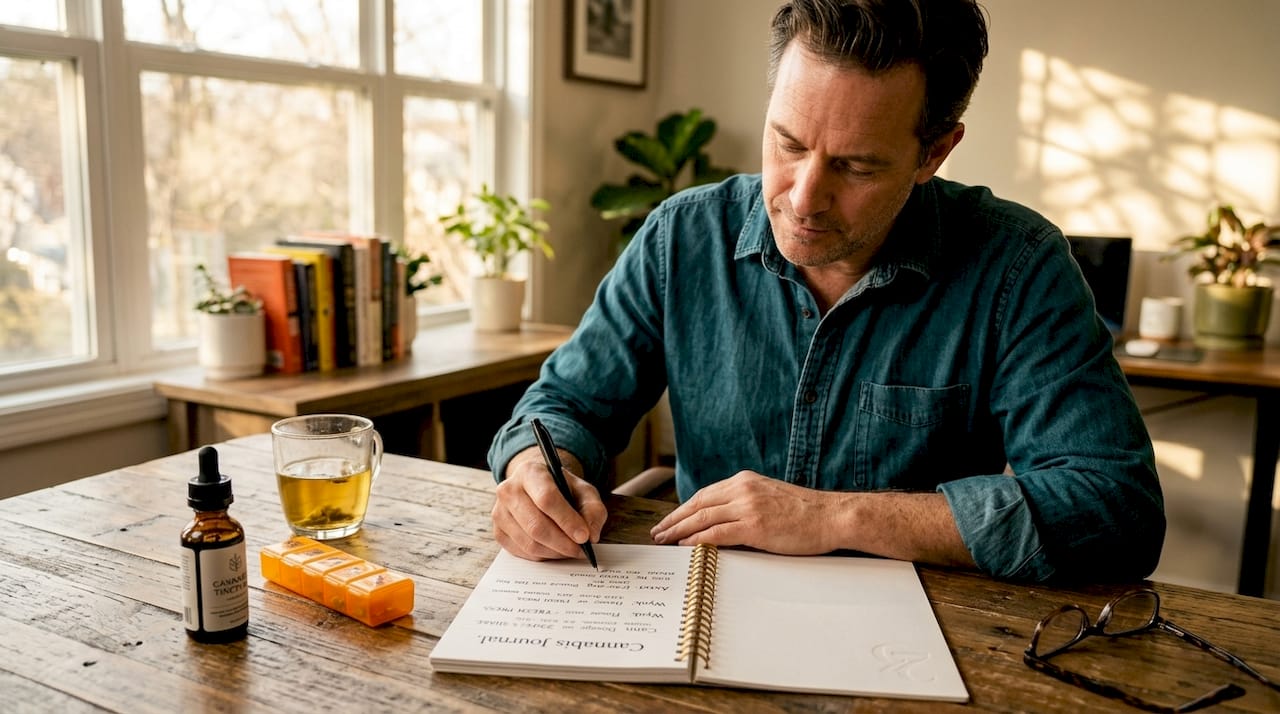
Pro Tip: Keep a simple usage journal. Write down what product you used, the dose, the time, and how you felt at 30 minutes, 1 hour, and 2 hours. After a few sessions, patterns emerge and you’ll know exactly what works for your body. Check out our safe cannabis dosages resource for a more detailed breakdown.
Comparing cannabis options for beginners: Which is right for you?
All of these tips add up to helping you find your best starting point. Here’s how the main options stack up side by side.
Your personal wellness goals and lifestyle preferences are the real deciding factors. Someone exploring cannabis for better sleep has different needs than someone who’s sober-curious and wants a social alternative to alcohol.
| Product | Best for | Wellness or recreation | Ease of use for beginners |
|---|---|---|---|
| CBD-dominant tincture | Anxiety, sleep support | Wellness | Very easy |
| Balanced THC/CBD edible | Relaxation, mild euphoria | Both | Moderate |
| THC microdose capsule | Precise dosing, daily routines | Wellness | Easy |
| Topical cream/balm | Localized discomfort | Wellness | Very easy |
| Low-dose vape | Quick relief, social settings | Recreation | Moderate |
Key deciding factors for beginners:
- Sensitivity: If you’re prone to anxiety or have never used cannabis, lean toward CBD-forward or balanced products. High-THC options can amplify stress in sensitive individuals.
- Lifestyle: Are you looking for a daily wellness ritual or an occasional social experience? Tinctures and capsules suit daily wellness; edibles and low-dose vapes fit social or evening use.
- Legal restrictions: Know your state’s laws. Hemp-derived CBD products are broadly accessible, but THC potency limits vary significantly by state.
- Time available: Edibles demand patience. If you need something that works quickly and adjustably, a tincture or vape is more practical.
- Comfort with psychoactivity: If you want zero “high,” stick to CBD topicals or pure CBD products. If you’re open to a gentle, relaxed feeling, a low-dose balanced product is a great first step.
It’s worth noting that the conversation around cannabis can feel contradictory. FDA regulatory research highlights unproven claims and safety concerns, while the wellness industry promotes benefits like relaxation and pain support. Neither side is entirely wrong. The honest answer lies somewhere in the middle: cannabis shows real promise for many people, but individual results vary and careful product selection matters enormously. Exploring resources on cannabis wellness benefits alongside more clinical perspectives on holistic health outcomes gives you a well-rounded picture.
The uncomfortable truth most cannabis “beginner guides” don’t tell you
With the main comparisons in mind, it’s worth stepping back to share what most beginner guides gloss over, or miss entirely.
Here’s the part nobody wants to say out loud: “natural” does not automatically mean “safe.” Hemp-derived, plant-based, botanical, all-natural, these are marketing words. They carry no regulatory weight and make no promises about what’s actually inside the product. We’ve seen beautifully packaged products with spotless branding deliver mislabeled doses or contain trace contaminants because the supply chain wasn’t tight enough. The wellness market moves fast, and regulatory bodies simply haven’t kept pace.
The flood of online cannabis advice makes this worse, not better. Social media “educators” often skip the nuanced safety conversation in favor of aspirational content. A five-minute video telling you which product “hits different” is not a substitute for reading a COA, understanding your own medical context, or starting slowly with professional guidance.
What actually works for beginners is intentional, skeptical, and incremental use. That means treating each session as a data point. It means not chasing a trend product just because it’s popular. It means ignoring advice from someone whose body, metabolism, and health history are completely different from yours.
“The gap between wellness marketing and real regulatory standards is wide enough to drive a truck through. Brands can make broad wellness claims without clinical proof, and consumers often have no easy way to verify them.”
We believe deeply in transparency because we’ve watched the alternative play out. Trusting a flashy label over documented lab testing is how beginners end up with anxiety-inducing doses or unexpected reactions. Your best protection is curiosity and patience. Stay grounded in the cannabis education facts that matter, and let your own experience guide you more than any trending recommendation.
Pro Tip: Focus on your own needs, not the crowd. Document your responses carefully in those first few weeks. Your personal data is worth more than any influencer’s glowing review.
Next steps: Explore safe, quality-focused cannabis for your journey
Armed with these evidence-based tips, you’re ready to explore safe choices with confidence.
Starting your cannabis journey doesn’t have to feel overwhelming or risky when you have the right information in your corner. At 23state, we’ve built our entire approach around quality, transparency, and thoughtful education for exactly this kind of moment. Whether you’re sober-curious, wellness-focused, or just looking for a chill new ritual, the goal is the same: feel good, stay safe, and enjoy the experience on your terms.

Explore our curated educational library on the role of cannabis in wellness routines to deepen your understanding before or alongside your first purchase. Ready to browse with confidence? Shop quality-assured cannabis and discover handcrafted, lab-tested products designed for real people looking for real experiences.
Frequently asked questions
What is the safest way for a beginner to start using cannabis?
Begin with a low-dose hemp-derived product, start slow, and always consult a doctor if you have underlying health concerns or take medications.
Are all CBD and hemp products safe and accurately labeled?
Most CBD and hemp products are not FDA-approved and may be mislabeled, so always request third-party lab results (COAs) before purchasing any product.
What are common side effects for first-time cannabis users?
Side effects can include dry mouth, drowsiness, and diarrhea; CBD may also elevate liver enzymes at higher doses, so starting low is critical.
How can I tell if a cannabis product is right for wellness or recreational use?
Product type, cannabinoid ratios, and your personal goals all play a role; low THC to CBD ratios tend to suit wellness use with fewer adverse events, while slightly higher THC products lean toward recreational enjoyment.