





TL;DR:
- Effective and safe edible enjoyment requires understanding proper dosing, timing, and product transparency.
- Patience, personalized adjustments, and thorough product verification help prevent overwhelming experiences.
You finally carved out a calm evening, grabbed an infused edible or THC drink, and settled in — only to find yourself either barely feeling a thing or, worse, way more overwhelmed than expected. That frustrating cycle of guessing, waiting, and second-guessing is exactly why so many adults walk away from edibles before giving them a fair shot. The truth is, enjoying edibles consistently and safely is less about luck and far more about having a clear, intentional process. This guide walks you through everything: what to have on hand, how your body processes THC, a proven step-by-step method, and how to troubleshoot when things go sideways.
Table of Contents
- What you’ll need for controlled edible enjoyment
- How edibles work: Onset, effects, and duration explained
- Step-by-step guide to enjoying edibles and drinks
- Common pitfalls, cognitive effects, and how to adjust
- Why personalization and patience transform edible enjoyment
- Ready for your next step? Explore quality options and resources
- Frequently asked questions
Key Takeaways
| Point | Details |
|---|---|
| Start low, wait long | Begin with a low dose of 2.5–5 mg THC and always wait at least 2 hours before redosing for safety. |
| Prioritize product quality | Choose edibles with clear THC/CBD labeling and third-party testing to ensure consistency and safety. |
| Expect delayed onset | Edibles can take 30–120 minutes to work due to digestion, so avoid impulsive redosing. |
| Track and adjust | Document your experiences so you can personalize and improve your edible routine next time. |
| Watch for side effects | Be mindful of possible cognitive or mood changes even at low doses and adjust your environment as needed. |
What you’ll need for controlled edible enjoyment
Before you try your first edible, it’s important to understand the tools and basics you’ll need.
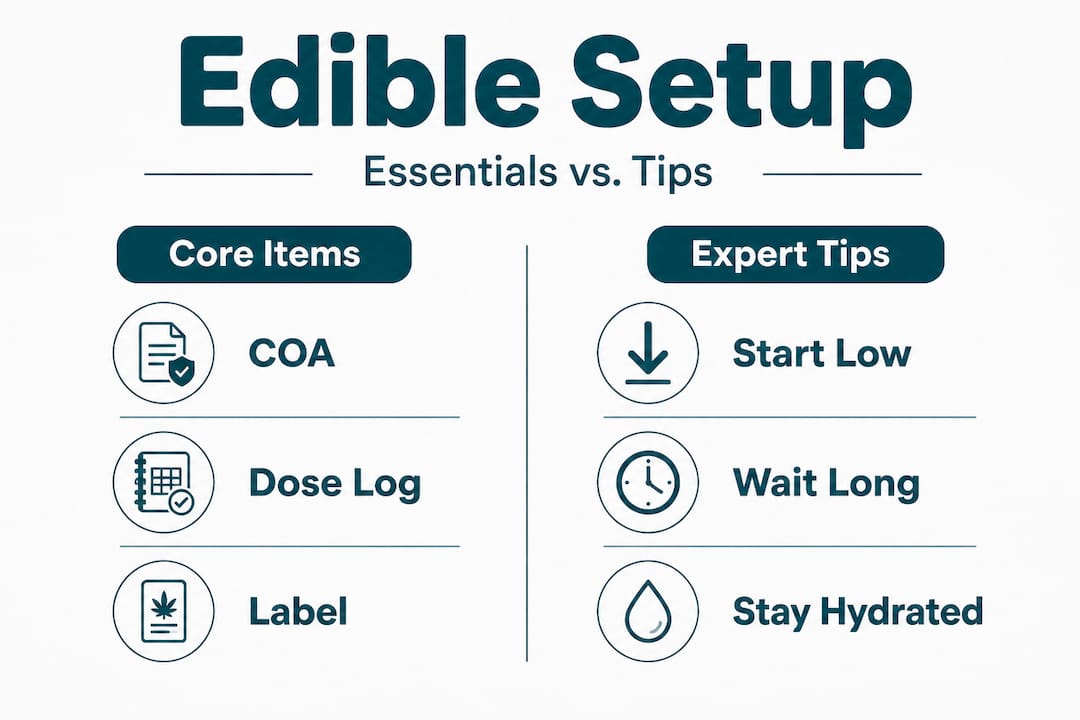
Starting strong means starting prepared. You wouldn’t bake something without checking the recipe first, and edibles deserve the same respect. The single most important thing you can do before your first session is verify what’s actually in your product.
Clear THC/CBD labeling and an available third-party Certificate of Analysis (COA) are non-negotiable signs of quality. A COA is a lab document from an independent testing facility confirming that the product contains what the label says it does. Without it, you’re essentially guessing your dose, and that’s where unpredictability creeps in. Reputable hemp-derived products always make their COAs easy to find, whether on the packaging or the brand’s website.
Beyond the product itself, here’s a practical checklist of what to have ready:
- A clearly labeled edible or THC drink with confirmed mg per serving
- A timer (your phone works great) set for 2 hours
- A light snack or meal eaten 30 to 60 minutes beforehand
- Water or a non-alcoholic drink to stay hydrated
- A comfortable, familiar setting where you feel at ease
- A notebook or notes app to document your experience
- A trusted person nearby if it’s your very first time
For deeper context on finding the right product for your comfort level, check out these safe cannabis dosage tips before you shop.
| Requirement | Why it matters |
|---|---|
| Third-party COA | Confirms actual THC/CBD content and product safety |
| Clear serving size label | Prevents accidental overconsumption |
| Light meal beforehand | Modulates absorption speed and reduces intensity spikes |
| Comfortable setting | Reduces anxiety and supports positive experience |
| Timer set for 2 hours | Prevents premature redosing, which is the most common mistake |
| Hydration | Supports overall comfort and reduces dry mouth |
Pro Tip: Always pull up the COA on the brand’s website before your first serving. Cross-check the THC mg on the label against the lab results. If the numbers don’t align or the COA is missing entirely, put the product down and find a more transparent option.
How edibles work: Onset, effects, and duration explained
With your essentials ready, it helps to know what’s happening in your body when you try edibles.
Here’s where most first-timers get caught off guard. Edibles don’t hit the same way as a vape or a joint, and understanding why that is will completely change how you approach the experience.
When you eat or drink a THC product, your digestive system gets to work. The THC travels through your stomach, into your small intestine, and from there to your liver. Your liver converts THC into a compound called 11-hydroxy-THC, which crosses the blood-brain barrier more effectively than regular THC. This digestive and liver processing pathway is exactly why edibles hit later, feel different, and last significantly longer than inhaled cannabis.
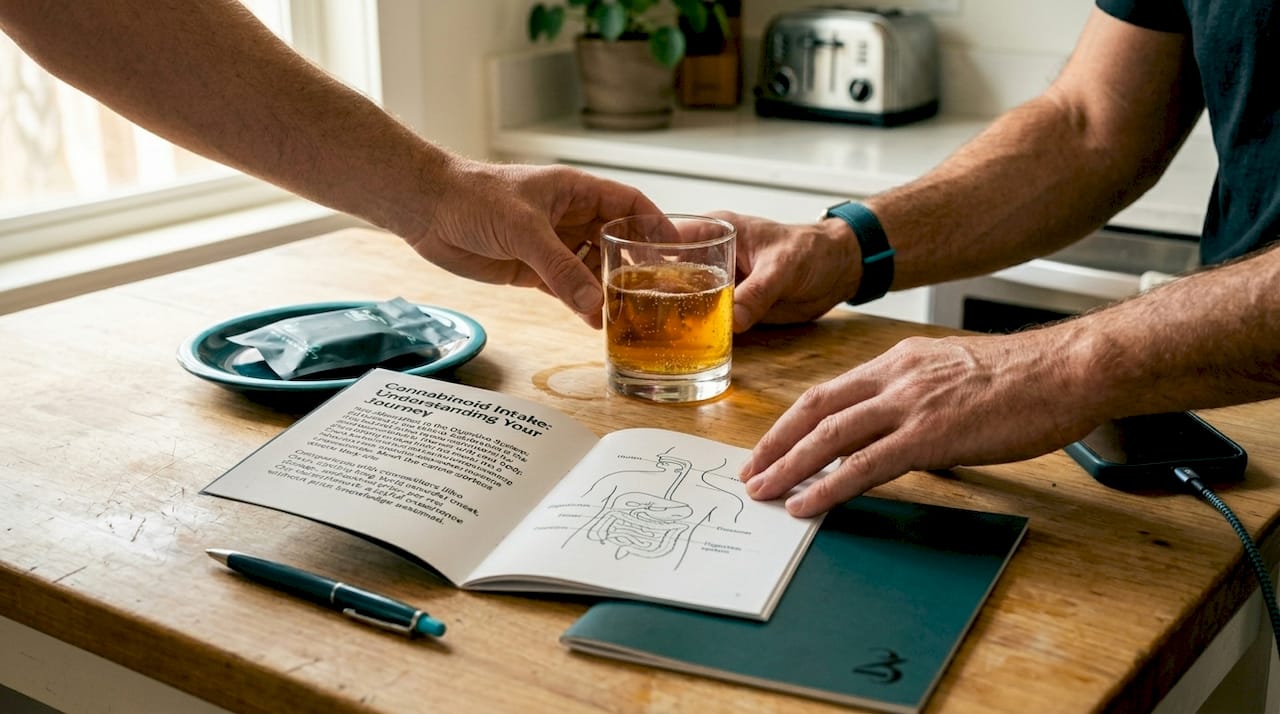
Most people feel edibles kick in somewhere between 30 and 90 minutes, but for some, it can take up to 2 full hours depending on a range of personal factors. Effects often peak between 2 and 4 hours and can linger for 6 to 8 hours total. That’s a long window, which is part of what makes edibles so appealing for extended relaxation — but also what catches people off guard when they think “nothing is happening” and reach for another piece too soon.
Several factors shape your personal onset and duration window:
- Body weight and metabolism: Faster metabolisms may feel effects sooner
- Food in your stomach: A fuller stomach can slow absorption, extending onset
- Tolerance level: Regular cannabis users may notice a delayed or muted effect
- Individual liver enzyme activity: This varies from person to person and affects how THC converts
- Product format: Drinks can absorb slightly faster than solid edibles due to liquid processing
For a deeper look at timing expectations specific to infused drinks, the THC edible onset timing guide breaks it down clearly. You can also explore onset and control tips for managing your expectations before each session.
Safety reminder: Do not redose before 2 full hours have passed, even if you feel nothing. The delay is normal. Stacking doses before the first one kicks in is the most common reason people have uncomfortable edible experiences.
Step-by-step guide to enjoying edibles and drinks
Knowing what to expect, you’re ready to follow these proven steps for a positive edible experience.
This is where it all comes together. Follow these steps whether you’re new to edibles or just looking to build a more consistent, satisfying routine.
- Choose your product. Select a clearly labeled edible or infused drink with a COA. Look for something in the 2.5 to 5 mg THC range per serving to start.
- Set your scene. Pick a comfortable, familiar environment. Home is ideal. Dim lighting, your favorite playlist, and a cozy couch go a long way.
- Eat a light meal. Have something modest like crackers, fruit, or a light snack 30 to 60 minutes before. Avoid alcohol entirely.
- Take your starting dose. Consume your chosen 2.5 to 5 mg THC serving. Sip a THC drink slowly or eat your edible mindfully.
- Start your timer. Set it for exactly 2 hours. This is your “do not redose before this point” threshold.
- Relax and observe. Notice subtle shifts: a slight body warmth, a gentle lift in mood, or a quiet sense of ease. These are signs the edible is beginning to work.
- Evaluate at the 2-hour mark. If effects feel too mild, you may consider an additional 2.5 mg. If you feel comfortable and relaxed, you’ve found your sweet spot for now.
- Document everything. Note the product, dose, setting, onset time, and how you felt. This is your roadmap for next time.
A practical starting dose of 2.5 to 5 mg THC with a minimum 2-hour wait before any additional dose is widely recommended by cannabis health professionals as the smartest, safest approach for new users.
| Starting dose | Typical experience | Best for |
|---|---|---|
| 1 to 2.5 mg THC | Subtle relaxation, mild mood lift | Ultra-sensitive users or microdosing |
| 2.5 to 5 mg THC | Gentle calm, light euphoria | First-time and occasional users |
| 5 to 10 mg THC | Noticeable effects, body relaxation | Experienced users with some tolerance |
| 10+ mg THC | Strong effects, higher intensity | Established, high-tolerance users only |
For more guidance on making the most of each session, the hemp edible steps guide offers a solid framework. You can also find actionable ideas to boost edible benefits through timing, setting, and pairing strategies. And if you’re integrating edibles into your weekly rhythm, these edible wellness tips offer a smart, health-forward perspective.
Pro Tip: Keep a simple edible journal on your phone. Log the brand, mg, time consumed, food eaten, setting, and how the experience unfolded. Even three or four entries will reveal patterns that help you personalize your dose and timing with real confidence.
Common pitfalls, cognitive effects, and how to adjust
If you experience anything unexpected or unpleasant, use these troubleshooting tips and adjustments.
Even well-prepared first-timers run into bumps. Knowing the most common mistakes and side effects ahead of time makes you far better equipped to handle them calmly and adjust for next time.
The most common mistakes people make:
- Redosing too soon because they don’t feel anything after 45 minutes
- Choosing a product with unclear or missing THC labeling
- Consuming edibles on an empty stomach, which can cause faster, more intense onset
- Pairing edibles with alcohol, which significantly amplifies effects
- Choosing a stressful or unfamiliar environment for the first experience
- Ignoring context like being tired, anxious, or dehydrated before starting
Side effects to watch for:
- Dry mouth (have water nearby)
- Mild anxiety or racing thoughts (change the setting, breathe deeply, stay calm)
- Drowsiness or lethargy (plan for it, avoid driving)
- Increased heart rate (usually temporary and harmless, but worth noting)
- Mild short-term memory changes during the experience
Research confirms that even low-dose edibles can produce measurable cognitive changes during the active period of intoxication, even when users feel only mildly affected. This matters more than people realize.
Key reminder: Do not drive, operate machinery, or engage in tasks requiring sharp focus while any THC edible is active in your system. Even a relaxed, pleasant buzz affects your cognitive performance more than you might perceive in the moment.
For a full breakdown of responsible workflows, the edible safety workflow guide is a worthwhile read. You can also browse wellness lifestyle tips for integrating edibles into a balanced, health-conscious routine. And if self-care is your main motivation, this self-care with edibles resource aligns edible use with intentional wellness practices.
Pro Tip: If an experience feels too intense, don’t panic. Find a comfortable space, drink some water, breathe slowly, and remind yourself that the feeling is temporary. CBD oil (if available) may help counteract THC intensity. Lying down in a quiet, dark room often helps most people ride it out comfortably.
Why personalization and patience transform edible enjoyment
Here’s a perspective shift worth sitting with: most people treat their first few edible experiences as a single test rather than the beginning of a personal learning curve. That framing sets them up for frustration.
Edibles work differently for everyone, and that’s not a bug — it’s a feature. Your metabolism, stress level, what you ate that day, how well you slept the night before, and even your emotional state going into the session all influence the outcome in meaningful ways. No two sessions are identical, which is exactly why copying your friend’s “perfect dose” rarely produces the same results for you.
The adults who consistently enjoy edibles aren’t necessarily the ones who figured it out instantly. They’re the ones who approached each session with curiosity, took notes, adjusted their dose or setting, and built a personal map over several experiences. This approach connects directly to the kind of safe enjoyment workflow that produces repeatable, enjoyable results.
Patience is also deeply underrated here. The urge to rush to a stronger dose or replicate someone else’s experience can derail what could otherwise be a genuinely wonderful session. Start lighter than you think you need to, wait longer than feels comfortable, and trust the process. The reward for patience is a consistent, dialed-in experience that you can actually look forward to. That’s the real goal.
Ready for your next step? Explore quality options and resources
With practical knowledge in your corner, you’re set to step into more satisfying edible routines — ones built on real experience and solid products rather than guesswork.
At 23rd State, every product is crafted with transparency at the center. Clear THC/CBD labeling, COA-verified quality, and a range of thoughtfully dosed edibles and infused drinks make it easier to start strong and keep refining your personal approach.
Whether you’re curious about microdosed THC drinks perfect for a chill evening, exploring hemp-derived edibles for wellness, or simply looking to upgrade your current routine with quality you can trust, the 23rd State catalog has something intentional for every kind of experience. Browse the full lineup, dig into the education blog for more in-depth guides, and feel confident in every serving you choose.
Frequently asked questions
How long should I wait before redosing with edibles?
Wait at least 2 hours after your initial dose to fully assess the effects before considering any additional serving. Redosing too early is the leading cause of overwhelming edible experiences.
What is a safe starting dose for first-time edible users?
A starting dose of 2.5 to 5 mg THC is widely recommended. Stay at the lower end until you understand how your body responds, then adjust gradually over multiple sessions.
Why do edibles take longer to work compared to smoking?
THC is digested and liver-processed rather than absorbed directly through the lungs, which slows onset significantly and produces a longer-lasting, often more body-centered effect.
Are there any side effects from low-dose edibles?
Yes — even low doses can cause measurable cognitive changes such as mild memory shifts, drowsiness, or altered focus during the active period, even when the experience feels gentle or pleasant.
How can I tell if an edible product is high quality?
Look for clearly labeled THC/CBD content per serving combined with an accessible third-party Certificate of Analysis. If either is missing, it’s a red flag worth taking seriously before you consume anything.