


TL;DR:
- Raw cannabis contains non-psychoactive THCA and CBDA with anti-inflammatory and neuroprotective benefits.
- Decarboxylation applies heat to convert acids into active THC and CBD, increasing psychoactive effects.
- Choose raw or decarboxylated cannabis based on wellness goals or recreational needs, following proper preparation methods.
You could roll a fresh cannabis bud between your fingers, smell that bright, earthy scent, and still eat the whole thing without feeling the slightest buzz. That surprises most people. Raw cannabis contains non-psychoactive THCA and CBDA instead of the THC and CBD your body needs to feel any psychoactive effect. Heat is what flips the switch. Whether you’re chasing a chill recreational experience or building a more intentional wellness routine, understanding this difference is genuinely useful. This guide breaks down the science, the real-world effects, and how to choose the right form for exactly what you’re after.
Table of Contents
- Understanding raw cannabis: Acidic cannabinoids and their effects
- What is decarboxylation? Science, steps, and impact
- Raw vs decarboxylated cannabis: Side-by-side comparison
- Choosing and using the right form: Practical guidance
- Why the debate is more than ‘raw vs decarb’: A deeper look
- Explore more wellness and lifestyle with 23rd State
- Frequently asked questions
Key Takeaways
| Point | Details |
|---|---|
| Raw vs decarb basics | Raw cannabis contains non-psychoactive compounds great for wellness, while decarboxylated forms unlock psychoactivity and higher absorption. |
| Health effects differ | THCA and CBDA found in raw form have distinct anti-inflammatory and anti-nausea benefits. |
| Decarboxylation essential for edibles | Without decarboxylation, edibles will lack psychoactive effects and may not provide intended results. |
| Choose based on goals | Select raw for wellness and non-intoxicating uses; pick decarboxylated for recreation or stronger therapeutic needs. |
Understanding raw cannabis: Acidic cannabinoids and their effects
Raw cannabis is simply the plant in its natural, unheated state. Fresh leaves, flowers, and stems straight from the plant. It looks and smells like what you’d expect, but chemically it’s a different story from the processed form most people picture.
The plant naturally produces THCA (tetrahydrocannabinolic acid) and CBDA (cannabidiolic acid), not THC or CBD. These are called acidic cannabinoids because they carry an extra carboxyl group in their molecular structure. That extra group is exactly what prevents them from binding to the brain’s CB1 receptors, which means no high, no matter how much you consume.
But non-intoxicating does not mean inactive. Integrating cannabis for holistic health starts with understanding that these acidic forms carry their own impressive profile:
- Anti-inflammatory effects: THCA shows real promise in reducing inflammation at the cellular level
- Neuroprotective properties: Early research points to neuroprotective benefits of acidic cannabinoids that may support brain health
- Anti-nausea action: CBDA is more potent than CBD at reducing nausea in preclinical models
- Antioxidant support: Both THCA and CBDA offer antioxidant activity that may protect cells from oxidative stress
Raw cannabis also provides anti-inflammatory and antioxidant properties that have sparked genuine interest among researchers and wellness-focused users alike.
“Think of raw cannabis as the plant’s wellness mode. It’s not trying to get you high. It’s working quietly, supporting your body in ways that heated forms simply can’t replicate.”
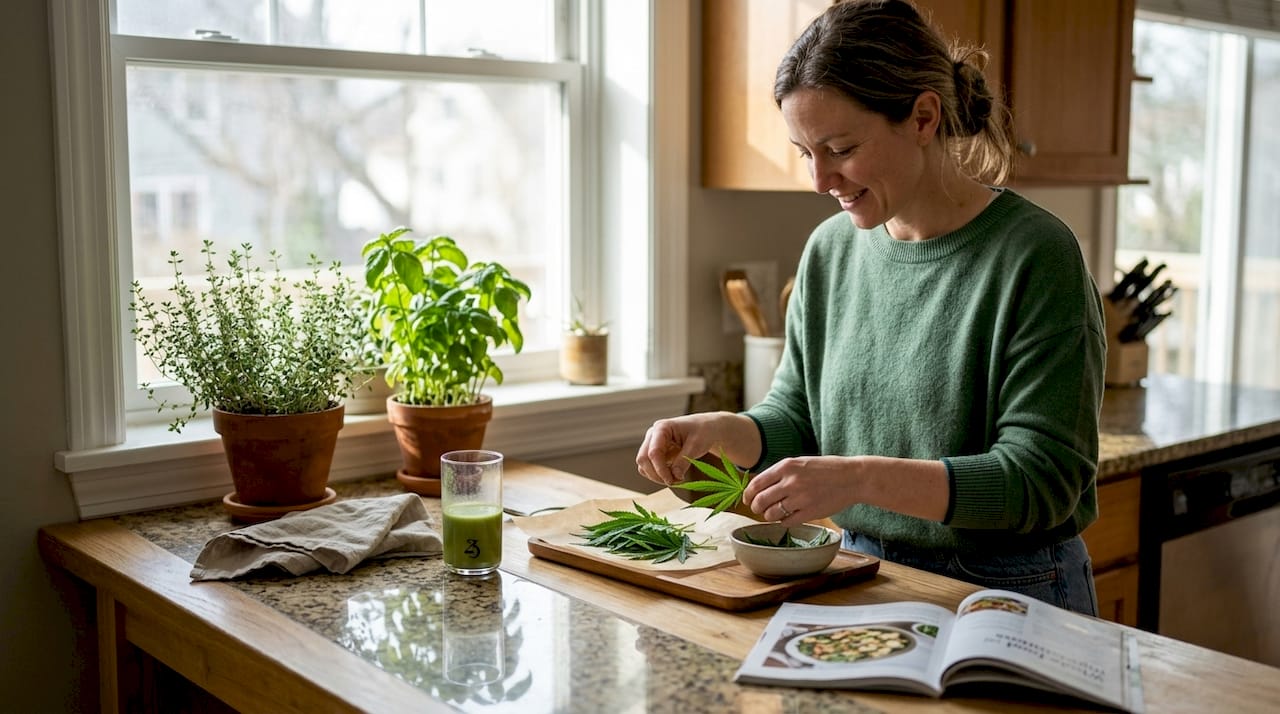
The most popular ways to consume raw cannabis include juicing fresh leaves and flowers, blending into smoothies, or adding to cold-pressed salads. Heat destroys the acidic cannabinoids, so keeping things cool is key.
This form is especially worth exploring if you’re building wellness routines with cannabis and want the plant’s benefits without any intoxication. It’s also a practical option for older adults, those with sensitivities to THC, or anyone who simply prefers staying clear-headed while still supporting their health.
The takeaway here is that raw cannabis is not just “unactivated” cannabis waiting to be heated. It’s a genuinely distinct form with its own therapeutic identity.
What is decarboxylation? Science, steps, and impact
Decarboxylation sounds like a chemistry exam word, but the concept is refreshingly simple. Apply heat to raw cannabis, and the acidic cannabinoids shed their extra carboxyl group as carbon dioxide (CO2). What remains is the active, psychoactive form you actually feel.
This is why smoking, vaping, or baking cannabis works. The heat does the chemistry for you in real time. Decarboxylation converts THCA into THC and CBDA into CBD, dramatically increasing both psychoactivity and bioavailability. Your body absorbs and uses these activated forms far more efficiently.
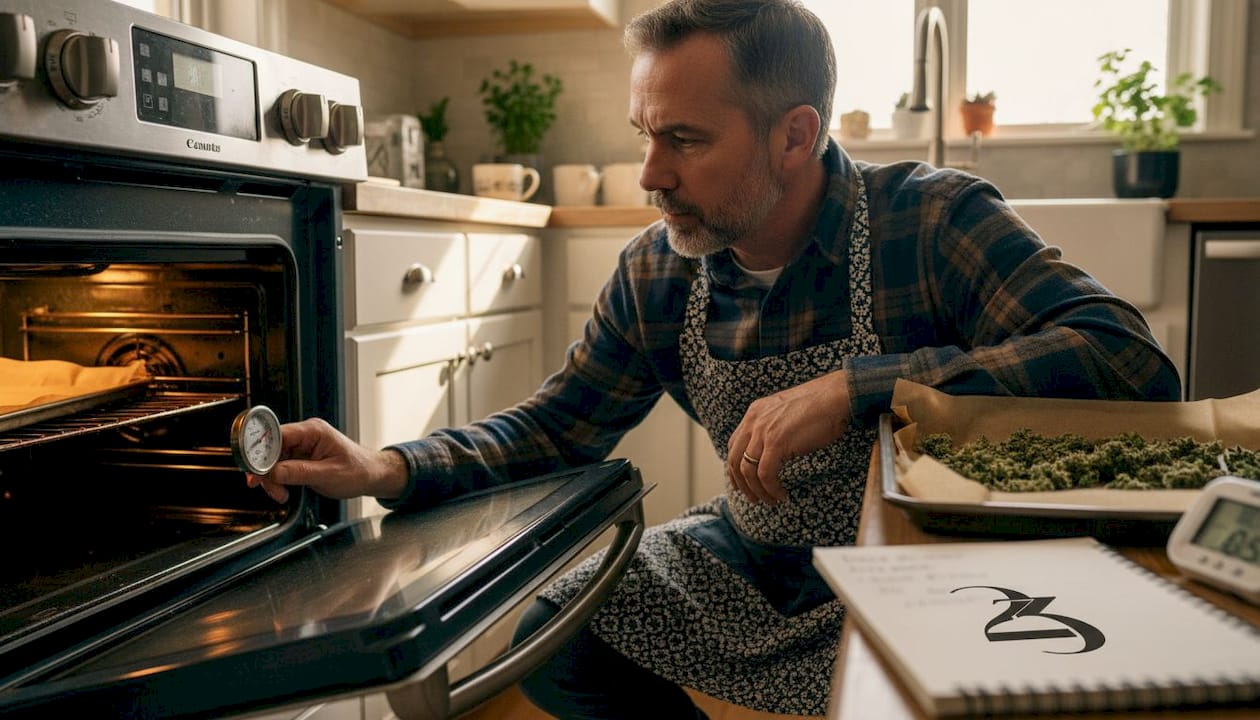
For home edibles or infusions, you need to decarboxylate deliberately before cooking. Here’s what the process looks like:
- Temperature: 110 to 120°C (230 to 250°F) is the sweet spot
- Time: 30 to 40 minutes in a standard oven
- Method: Spread ground cannabis evenly on a parchment-lined baking sheet
- Airflow: Cover loosely with foil to reduce odor while still allowing moisture to escape
Understanding the differences between THCA and THC helps you see why this step matters so much for potency.
| Variable | Optimal range | Result if wrong |
|---|---|---|
| Temperature | 230 to 250°F | Too low: incomplete conversion; Too high: CBN formation |
| Time | 30 to 40 minutes | Too short: weak product; Too long: degraded THC |
| Grind consistency | Medium grind | Too fine: burns; Too coarse: uneven conversion |
Overheating is the most common mistake. Push past 300°F and temperature and time factors cause THC to degrade into CBN, a cannabinoid associated with sedation and much weaker psychoactive effects. Your potency drops fast.
Proper decarboxylation also matters for cannabis potency and wellness outcomes. A well-decarboxylated product means consistent, predictable effects every time.
Pro Tip: Use an oven thermometer rather than relying on your oven’s built-in display. Most home ovens run 10 to 25°F hotter or cooler than the dial suggests, and that variance can meaningfully affect your final product.
The science of decarboxylation is well-established, and getting it right is the single biggest factor separating a powerful edible from a disappointing one.
Raw vs decarboxylated cannabis: Side-by-side comparison
With the science clear, let’s break down how raw and decarboxylated cannabis truly stack up across major categories.
| Category | Raw cannabis | Decarboxylated cannabis |
|---|---|---|
| Primary compounds | THCA, CBDA | THC, CBD |
| Psychoactive effect | None | Yes (THC-dependent) |
| Wellness benefits | Anti-inflammatory, neuroprotective, anti-nausea | Pain relief, anxiety reduction, sleep support |
| Best intake method | Juicing, smoothies, raw salads | Smoking, vaping, edibles, tinctures |
| Bioavailability | Lower (acidic form absorbs differently) | Higher (activated forms absorb more readily) |
| Legal considerations | Often more accessible (low Delta-9 THC) | Varies by state; regulated as THC product |
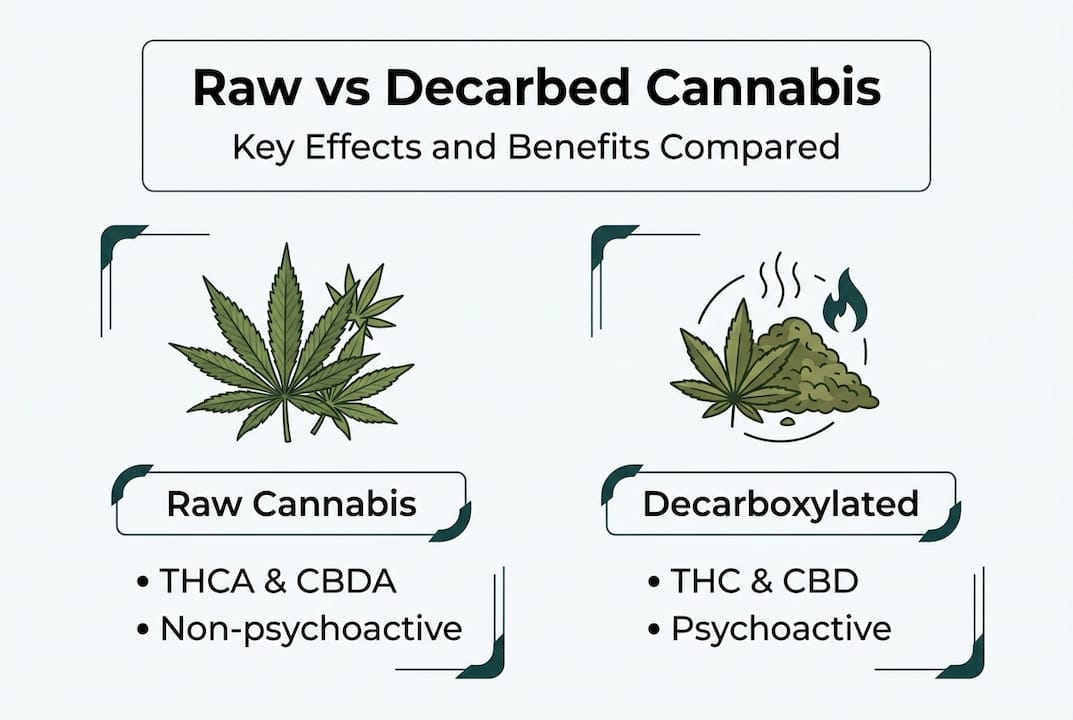
The core principle is straightforward. Raw cannabis suits non-intoxicating wellness uses, while decarboxylated cannabis is what you need for psychoactive and stronger therapeutic effects.
Here’s a quick breakdown of who benefits most from each:
- Raw cannabis is ideal for: Daily wellness routines, anti-inflammatory support, those avoiding intoxication, and users new to cannabis
- Decarboxylated cannabis is ideal for: Recreational enjoyment, sleep support, stronger pain relief, and experienced users seeking intentional effects
“Neither form is universally superior. The best choice is the one that matches your goal for that day, that moment, that mood.”
Bioavailability is worth a closer look here. CBD bioavailability research shows that activated cannabinoids are absorbed more efficiently by the body, which is why decarboxylated forms tend to produce stronger, more consistent effects at lower doses. Raw forms absorb differently, which is part of why their effects feel subtler and more systemic rather than acute.
For a deeper look at cannabis facts for wellness and recreation, it helps to keep both forms in your toolkit rather than committing to just one.
Understanding wellness-focused cannabis benefits means recognizing that raw and decarboxylated forms are genuinely complementary, not competing.
Choosing and using the right form: Practical guidance
Armed with a side-by-side view, here’s a practical guide to choosing and using the best form for your needs.
Start with your goal. That one question simplifies everything:
- Want calm, clear-headed wellness support? Go raw.
- Want recreational enjoyment or stronger therapeutic effects? Go decarboxylated.
For those ready to decarboxylate at home, here’s a clean step-by-step process:
- Preheat your oven to 240°F (use an oven thermometer for accuracy)
- Break cannabis into small, even pieces (medium grind works best)
- Spread evenly on a parchment-lined baking sheet
- Cover loosely with foil
- Bake for 30 to 40 minutes, checking at the 30-minute mark
- Remove when the color shifts from bright green to a light golden-brown
- Cool completely before using in recipes or infusions
Decarboxylated cannabis is essential for potent edibles, while raw forms shine in juicing and non-intoxicating remedies. Skipping this step and adding raw cannabis to butter or oil will give you a very weak, barely active product.
Common mistakes to avoid:
- Overheating: Temperatures above 300°F degrade THC into CBN fast
- Under-timing: Less than 25 minutes at proper temp leaves significant THCA unconverted
- Wrong form for the goal: Adding raw cannabis to brownies expecting a high is a recipe for disappointment
- Skipping the cool-down: Using hot, freshly decarbed cannabis immediately can affect infusion quality
On the legal side, THCA flower is legal in certain contexts as long as Delta-9 THC stays under 0.3%, which makes raw or minimally processed hemp-derived cannabis accessible in many states where traditional THC products are restricted.
Pro Tip: Explore different routes of cannabis administration to find what fits your lifestyle. Sublingual tinctures, for example, offer faster onset than traditional edibles and give you more control over dosing.
Building a cannabis self-care workflow means knowing which form to reach for and when. Keep both options available, and let your intention guide the choice. The science behind THCA vs THC supports a flexible, goal-oriented approach rather than a one-size-fits-all habit.
Why the debate is more than ‘raw vs decarb’: A deeper look
Here’s an honest take: the conversation about raw versus decarboxylated cannabis is often framed as a potency contest, and that framing misses the point entirely.
Conventional wisdom in cannabis culture tends to prioritize psychoactivity. More THC, stronger effects, bigger experience. But that lens undersells what raw cannabis actually offers. Acidic cannabinoids have mechanisms and effects that simply don’t exist in decarboxylated forms. THCA and CBDA interact with the body through pathways that activated THC and CBD don’t touch in the same way. That’s not a consolation prize. That’s a genuinely different toolkit.
New research continues to reveal that raw cannabis’s therapeutic potential extends well beyond being “inactive” plant material waiting to be heated. The wellness community is catching on, and the science is catching up.
The smartest approach is to stop asking which form is better and start asking which form serves you better right now. Your goals, your body, your lifestyle. Explore cannabis features for wellness with that personal lens, and you’ll make far more intentional, satisfying choices.
Explore more wellness and lifestyle with 23rd State
Now that you’ve got a clear picture of raw versus decarboxylated cannabis, the next step is putting that knowledge to work in your actual life. Whether you’re building a daily wellness ritual or simply curious about what intentional cannabis use can feel like, there’s a lot more to explore.
At 23rd State, we’re here to keep you informed, inspired, and well-equipped for the journey. From expert education on cannabinoids and wellness to lifestyle-forward 23rd State merch that lets you wear your values, we’ve built a space for curious, health-conscious people who want more than just products. They want a whole vibe. Dive into our blog, browse the collection, and stay connected with a community that takes cannabis wellness seriously and has a great time doing it.
Frequently asked questions
Can you eat raw cannabis and get the same effects as smoking it?
No, eating raw cannabis will not produce a high because it contains non-intoxicating acidic cannabinoids like THCA and CBDA rather than active THC and CBD. Heat is required to trigger that chemical conversion.
What are the main benefits of raw cannabis?
Raw cannabis offers anti-inflammatory, neuroprotective, and anti-nausea benefits without psychoactive effects, thanks to THCA and CBDA in their natural acidic form. These benefits are distinct from what activated THC and CBD provide.
How do I decarboxylate cannabis at home?
Heat your cannabis at 230 to 250°F for 30 to 40 minutes to convert THCA and CBDA into active THC and CBD, following optimal temperature and time parameters for best results. Always use an oven thermometer for accuracy.
Why do edibles sometimes feel weak?
Incomplete or improper decarboxylation is the most common culprit, leaving significant amounts of THCA unconverted and resulting in little to no psychoactive effect. Temperature and timing both matter enormously.
Is raw cannabis legal in all states?
Raw cannabis legality varies by state, but THCA flower is often legal when Delta-9 THC content remains below 0.3%, making hemp-derived raw cannabis accessible in many markets. Always check your local regulations before purchasing.