


Not all cannabis products deliver the same effects. While traditional flower typically maxes out at 35% THC, cannabis concentrates achieve 40-99% potency, fundamentally changing how users experience cannabinoids. This dramatic difference in potency transforms dosing, effects, and safety considerations for both wellness seekers and recreational consumers. Whether you’re curious about solventless rosin or solvent-based distillates, understanding concentrates helps you make informed choices about products that have captured over a quarter of the cannabis market. This guide breaks down production methods, varieties, potency ranges, health considerations, and practical usage tips to help you navigate the concentrate landscape confidently.
Table of Contents
- What Are Cannabis Concentrates And How Potent Are They?
- How Cannabis Concentrates Are Made: Solvent-Based Vs Solventless Methods
- Risks, Market Trends, And Labeling Nuances Of Cannabis Concentrates
- Using Cannabis Concentrates: Varieties, Applications, And Quality Considerations
- Explore Quality Hemp-Derived Cannabis Concentrates At 23rd State
- Frequently Asked Questions
Key takeaways
| Point | Details |
|---|---|
| Potency advantage | Concentrates deliver 40-99% cannabinoid content compared to flower’s 15-35%, requiring careful dosing |
| Production methods | Solvent-based extractions use butane or CO2 for efficiency while solventless methods prioritize purity through mechanical processes |
| Market presence | Concentrates represent 25-35% of cannabis sales in mature markets, reflecting growing consumer demand |
| Health considerations | High potency products carry increased risks including potential for use disorder and exposure to vaping toxicants |
| Quality factors | Starting material quality, extraction method, and third-party lab testing determine concentrate safety and effectiveness |
What are cannabis concentrates and how potent are they?
Cannabis concentrates are specialized extracts that isolate cannabinoids and terpenes from the cannabis plant, removing excess plant material to create products with exceptional potency. Unlike traditional flower, concentrates achieve 40-99% potency while flower typically ranges from 15-35%. This massive potency gap fundamentally changes how your body processes cannabinoids and how quickly effects manifest.
Potency matters enormously for both wellness and recreational applications. Higher cannabinoid concentrations mean smaller doses produce desired effects, making concentrates cost effective for regular users. Medical patients seeking specific therapeutic benefits often prefer concentrates because precise dosing becomes easier with consistent potency levels. Recreational users appreciate the immediate, powerful effects that concentrates deliver compared to slower-onset flower consumption.
Interestingly, concentrates show more accurate labeling than flower products, giving consumers better clarity about what they’re consuming. This accuracy helps you avoid unexpected experiences and dial in your ideal dose more reliably. Quality concentrates undergo rigorous testing that verifies cannabinoid percentages, residual solvents, pesticides, and microbial contaminants.
The benefits of high potency concentrates include:
- Rapid onset of effects for quick symptom relief
- Cost efficiency through smaller required doses
- Precise dosing capabilities for medical applications
- Diverse consumption methods from vaping to edibles
- Enhanced flavor profiles from preserved terpenes
However, extreme potency demands respect. First-time concentrate users often underestimate how little product produces strong effects, leading to uncomfortable experiences. The legal THC limits vary significantly between hemp-derived and marijuana-derived products, affecting what concentrates you can legally access. Tolerance builds faster with high-potency products, potentially leading to dependence issues if not managed carefully. Understanding your personal tolerance and starting with minimal doses prevents negative experiences while you learn how concentrates affect your unique physiology.
How cannabis concentrates are made: solvent-based vs solventless methods
Production method dramatically influences concentrate purity, potency, cost, and consumer perception. Two distinct approaches dominate the market, each offering specific advantages for different priorities and applications.
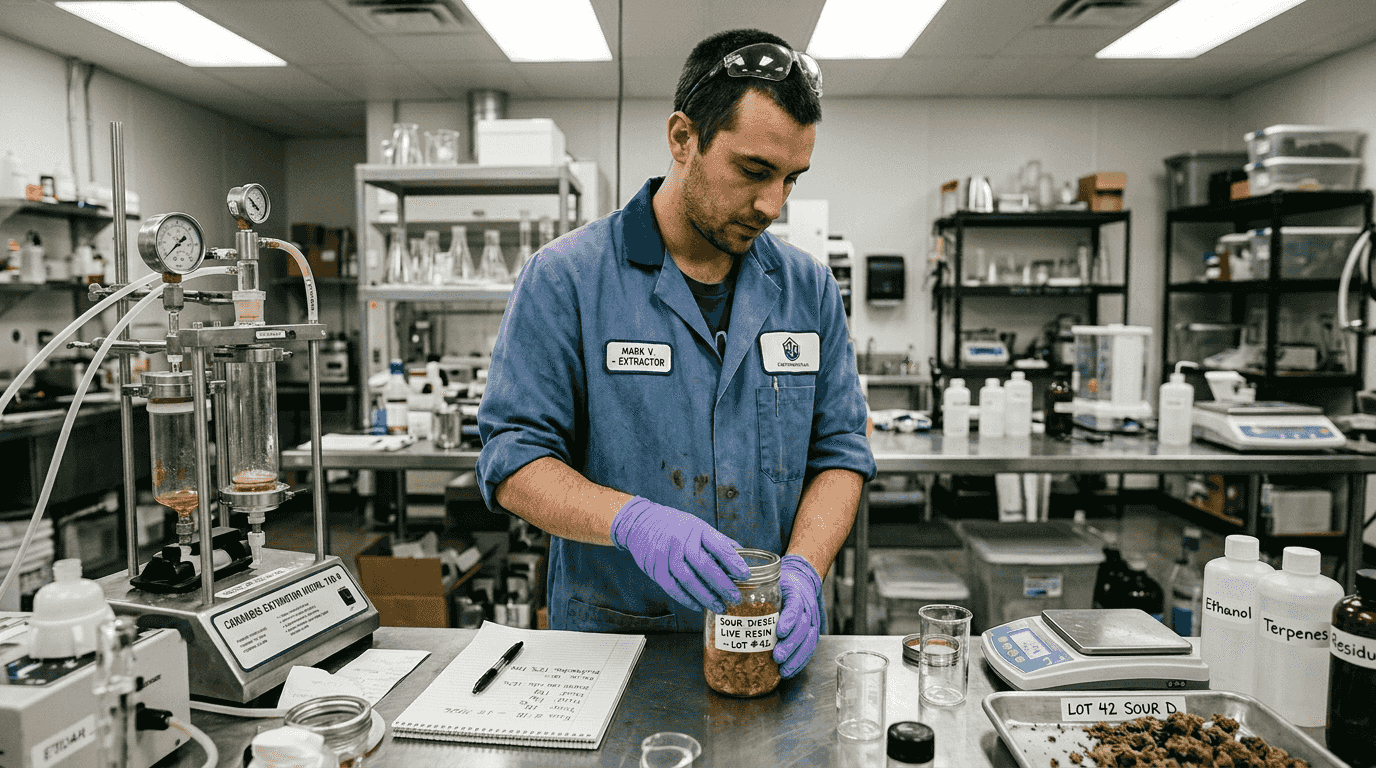
Solvent-based extraction uses chemical solvents like butane, propane, CO2, or ethanol to strip cannabinoids and terpenes from plant material. Producers soak or blast cannabis with solvents that dissolve desired compounds, then carefully purge the solvent through heat and vacuum processes. This method achieves impressive efficiency, processing large quantities quickly with high yields. Solvent-based concentrates typically reach 70-99% potency, with distillates hitting the upper end of that range. The process allows precise control over which compounds end up in the final product, enabling creation of broad-spectrum or isolate concentrates.
Solventless production relies on mechanical processes like ice-water hash and rosin pressing that use only physical force, temperature, and water to separate trichomes from plant material. These methods appeal to purity-focused consumers who want zero residual solvents in their products. Hemp-derived concentrate producers increasingly favor solventless techniques because they align with wellness-oriented branding and consumer preferences for natural processing. However, solventless methods require more labor, produce lower yields, and typically achieve 60-85% potency rather than the 90%+ possible with solvents.
| Factor | Solvent-Based | Solventless |
|---|---|---|
| Purity concerns | Requires purging; trace solvents possible | No solvents; mechanical separation only |
| Production yield | High efficiency; 15-25% yields common | Lower yields; 10-15% typical |
| Potency range | 70-99% THC achievable | 60-85% THC typical |
| Hemp compatibility | Excellent for low-THC hemp processing | Ideal for quality-focused hemp brands |
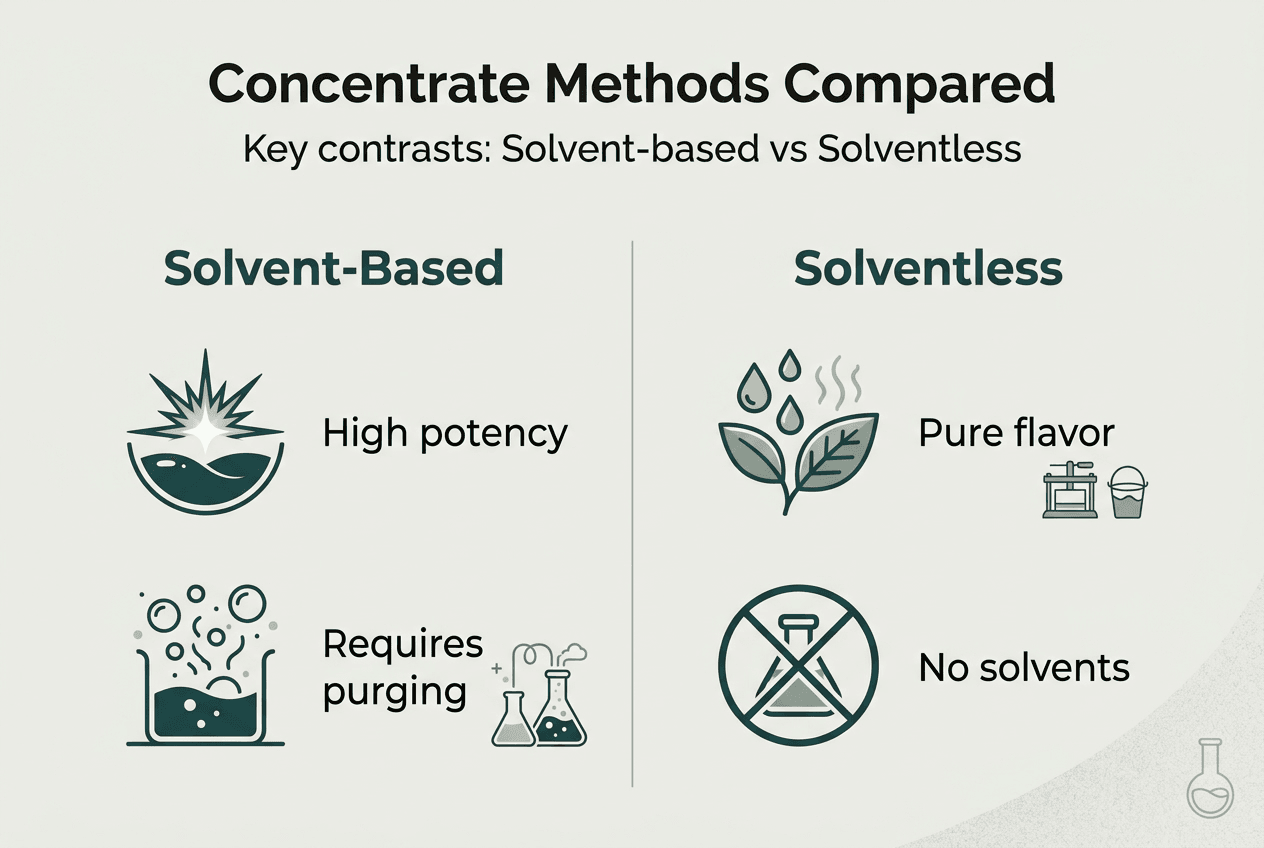
Solvent-based advantages include scalability for commercial operations, consistent product characteristics, and ability to process lower-grade starting material effectively. The downsides involve potential residual solvents if purging is incomplete, regulatory scrutiny around explosive solvents like butane, and consumer perception issues among purity-focused buyers.
Solventless benefits center on absolute purity, superior flavor preservation, and premium market positioning that commands higher prices. The tradeoffs include labor-intensive production, requirement for top-quality starting material since the process can’t compensate for poor inputs, and lower overall efficiency that increases costs.
Pro Tip: When choosing between concentrate types, consider your priorities. If maximum potency and cost efficiency matter most, solvent-based distillates deliver. If you prioritize natural processing and full-spectrum terpene profiles, invest in solventless rosin or hash. Check our cannabis extract guide 2026 for detailed breakdowns of specific concentrate varieties and their ideal applications.
Risks, market trends, and labeling nuances of cannabis concentrates
Concentrates have captured substantial market share as consumers discover their advantages. Cannabis concentrates account for 25-35% of total cannabis sales in mature legal markets, reflecting steady growth from earlier single-digit percentages. This expansion demonstrates consumer willingness to explore beyond traditional flower, driven by potency, convenience, and diverse consumption options.
However, rising concentrate popularity brings legitimate health concerns that responsible consumers must understand. Research shows vaping concentrates produces potentially toxic byproducts including isoprene and various aldehydes that irritate respiratory systems. High potency products correlate with increased risks of cannabis use disorder, particularly among younger users or those with genetic predispositions to addiction. Studies link regular high-potency concentrate use to elevated psychosis risk in vulnerable populations, though causation remains debated.
Vaping, the most popular concentrate consumption method, introduces additional variables. Heating elements and cartridge materials sometimes leach heavy metals or produce harmful degradation products. Unregulated products may contain cutting agents like vitamin E acetate, which caused serious lung injuries during the 2019 vaping crisis. Even legitimate products create aerosols with particle sizes that penetrate deep into lung tissue, potentially causing long-term respiratory effects not yet fully understood.
Labeling accuracy varies significantly across markets and product types. While concentrates generally show better labeling precision than flower, inconsistencies persist. Some producers inflate THC percentages to attract buyers, while others fail to adequately test for contaminants. Hemp-derived concentrates face different regulatory frameworks than marijuana-derived products, creating confusion about potency limits, testing requirements, and legal status. Consumer education becomes critical for navigating these complexities safely.
Essential safety practices for concentrate users:
- Start with minimal doses, waiting 15-30 minutes between uses to assess effects
- Purchase only from licensed dispensaries or reputable hemp retailers with transparent testing
- Verify third-party lab results showing cannabinoid potency and contaminant screening
- Avoid black market products lacking quality control and safety testing
- Use temperature-controlled devices to minimize toxic byproduct formation
- Store concentrates properly in cool, dark places to preserve potency and prevent degradation
- Monitor your consumption patterns to prevent tolerance buildup and dependence
Understanding product safety standards helps you identify trustworthy brands and avoid potentially dangerous products. Reputable producers provide comprehensive certificates of analysis showing not just potency but also pesticide screening, heavy metal testing, residual solvent analysis, and microbial contamination checks. These documents should be readily accessible, either on product packaging via QR codes or on company websites.
The concentrate market continues evolving rapidly. New extraction technologies promise cleaner products with better terpene preservation. Regulatory frameworks slowly mature, bringing improved consumer protections and standardized testing protocols. As the industry develops, informed consumers who understand both benefits and risks will make choices that maximize wellness benefits while minimizing potential harms.
Using cannabis concentrates: varieties, applications, and quality considerations
The concentrate market offers diverse product types, each with distinct characteristics suited to different preferences and applications. Shatter presents as a translucent, glass-like concentrate that breaks cleanly, typically produced through butane extraction and valued for stability and potency. Wax features a softer, opaque consistency resembling honeycomb or crumble, easier to handle but less stable than shatter. Rosin represents premium solventless concentrates created by applying heat and pressure to cannabis, preserving full terpene profiles without solvents. Distillate achieves the highest purity levels, often exceeding 90% THC, through molecular distillation that separates individual cannabinoids but removes most terpenes.
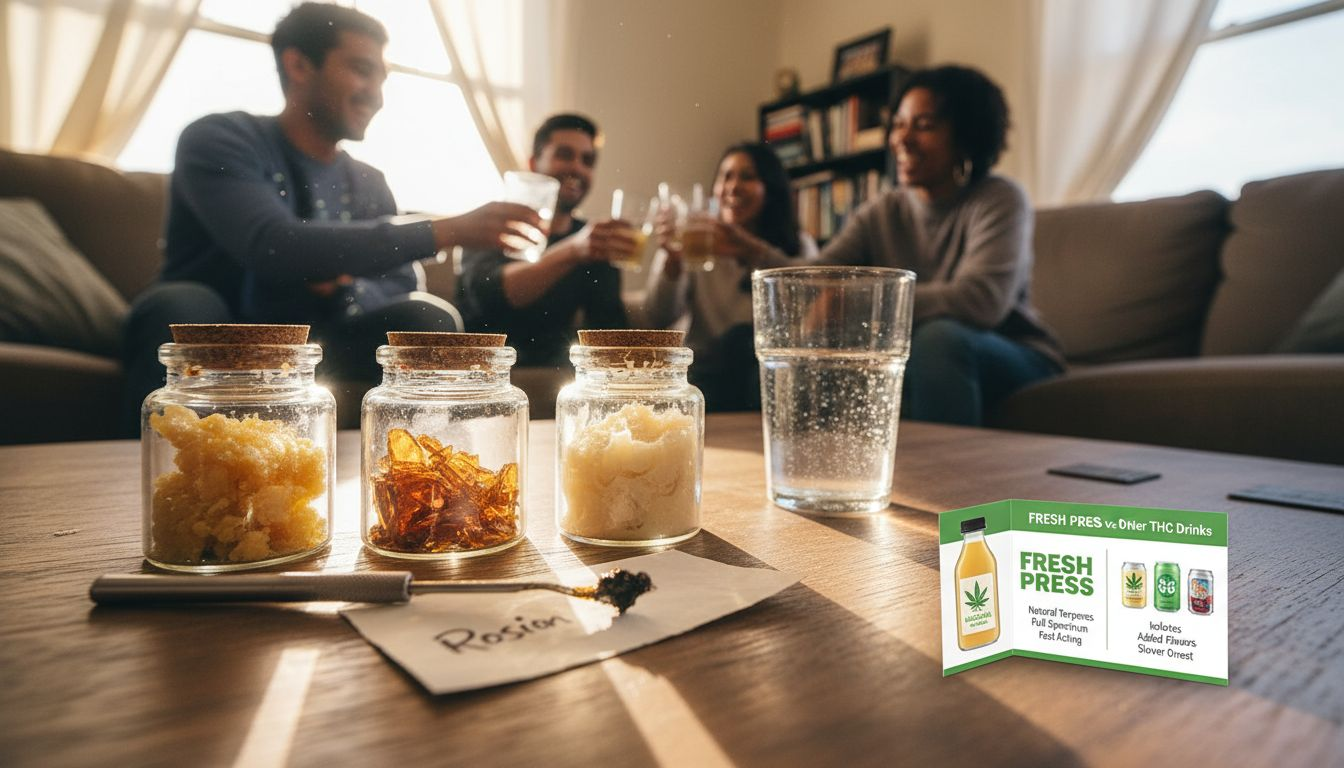
Consumption methods vary based on concentrate type and user preferences. Vaping remains most popular, using cartridges or specialized devices that heat concentrates below combustion temperatures. Dabbing involves flash-vaporizing concentrates on heated surfaces, delivering immediate, powerful effects favored by experienced users. Edible production incorporates concentrates into foods and beverages, though proper decarboxylation and even distribution require careful technique. Topical applications use concentrates in balms and lotions for localized effects without psychoactive experiences.
Evaluating concentrate quality requires systematic assessment across multiple factors:
- Examine starting material quality by researching producer cultivation practices and source genetics
- Verify extraction method aligns with your purity preferences, checking for solventless or properly purged solvent-based production
- Review third-party lab testing results for potency accuracy, confirming cannabinoid percentages match label claims
- Check contaminant screening including pesticides, heavy metals, residual solvents, and microbial content
- Assess appearance, aroma, and consistency as quality indicators, avoiding products with off-colors or chemical smells
- Research brand reputation through reviews, industry recognition, and transparency about production processes
Potency varies significantly between concentrate types. Rosin solventless concentrates average 60-85% THC while distillates reach 85-99% through solvent-based processing. This potency difference affects dosing, with distillates requiring extremely small amounts to produce strong effects. Understanding these ranges helps you select appropriate products for your tolerance and desired experience intensity.
Pro Tip: When trying concentrates for the first time, start with a dose smaller than you think necessary. A rice-grain-sized amount of high-potency concentrate often produces significant effects. Wait at least 15 minutes before considering additional doses, as concentrate effects manifest more rapidly than edibles but can still take several minutes to fully develop. This conservative approach prevents overwhelming experiences that discourage further exploration.
Quality assessment must account for the reality that solventless methods can’t fix poor inputs. Premium concentrates begin with carefully cultivated, properly cured cannabis that provides abundant trichomes and robust terpene profiles. Inferior starting material produces mediocre concentrates regardless of extraction expertise. This principle explains why top-tier concentrates command premium prices, reflecting the quality investment throughout the entire production chain.
Trustworthy labeling includes detailed information beyond basic THC percentages. Look for batch numbers enabling traceability, harvest dates indicating freshness, comprehensive cannabinoid profiles showing minor cannabinoids like CBG and CBN, terpene breakdowns identifying flavor and effect contributors, and clear storage instructions preserving product integrity. Brands providing this transparency demonstrate commitment to consumer safety and product quality.
For practical guidance on specific concentrate applications, explore our cannabis distillate guide covering versatile uses from vaping to culinary infusions. Understanding how different concentrate types perform in various applications helps you select products matching your intended use and experience level.
Explore quality hemp-derived cannabis concentrates at 23rd State
Navigating the concentrate landscape becomes easier with trusted educational resources and reliable product sources. At 23rd State, we combine comprehensive educational content with carefully curated hemp-derived cannabis products designed for wellness and recreational enjoyment. Our platform helps you understand not just what concentrates are, but how to use them safely and effectively for your specific goals.

Our blog provides ongoing education about concentrate varieties, consumption methods, legal considerations, and quality standards. Whether you’re exploring concentrates for the first time or refining your knowledge as an experienced user, our cannabis extract guide 2026 offers detailed insights into production methods, potency considerations, and application techniques. We believe informed consumers make better choices that enhance their cannabis experiences while minimizing risks.
Explore our selection of premium hemp-derived concentrates and discover how quality products paired with solid knowledge create optimal wellness and recreational outcomes.
Frequently asked questions
What are the safest ways to consume cannabis concentrates?
The safest consumption methods involve temperature-controlled vaping devices that prevent combustion and toxic byproduct formation. Start with minimal doses, purchase only tested products from licensed sources, and avoid black market concentrates lacking quality control. Understanding cannabis compliance laws 2026 helps you navigate legal products with proper safety testing.
How do solventless and solvent-based concentrates differ in purity?
Solventless concentrates use only mechanical separation through heat, pressure, or ice water, guaranteeing zero residual solvents. Solvent-based concentrates require thorough purging to remove butane, propane, or CO2 used during extraction. Properly purged solvent-based products meet safety standards, but solventless methods eliminate any residual solvent concerns entirely, appealing to purity-focused consumers.
Are cannabis concentrates legal everywhere in the U.S.?
Legality depends on whether concentrates derive from hemp or marijuana and your state’s specific regulations. Hemp-derived concentrates containing less than 0.3% delta-9 THC enjoy federal legality under the 2018 Farm Bill, though some states restrict them. Marijuana-derived concentrates remain federally illegal but are legal in states with adult-use or medical cannabis programs.
How can I tell if a cannabis concentrate is high quality?
High-quality concentrates display proper consistency for their type, lack off-putting chemical odors, and come with comprehensive third-party lab results. Check certificates of analysis for potency accuracy, pesticide screening, heavy metal testing, and residual solvent analysis. Research producer reputation, cultivation practices, and extraction methods to verify commitment to quality throughout the production chain.
What precautions should I take when trying concentrates for the first time?
Start with an extremely small dose, roughly the size of a rice grain, and wait 15-30 minutes before considering more. Use concentrates in a comfortable, safe environment where you can relax if effects feel overwhelming. Have a trusted friend present, stay hydrated, and avoid combining concentrates with alcohol or other substances. Choose lower-potency products like rosin over ultra-high-potency distillates for initial experiences.