



Many people assume all hemp is the same, but that misconception can lead to confusion when shopping for wellness or recreational products. Hemp actually encompasses a wide range of plant types with vastly different cannabinoid profiles, legal classifications, and intended uses. Understanding these distinctions helps you make informed decisions about which hemp products align with your goals, whether you seek non-intoxicating wellness support or exploring legal recreational options. This guide breaks down hemp types by their chemical makeup, agricultural purposes, and evolving legal definitions in 2026.
Table of Contents
- Understanding Hemp Types By Cannabinoid Chemotype
- Industrial Hemp Types And Agricultural Uses In The U.S.
- Legal Definitions And Evolving Regulations For Hemp In 2026
- Practical Distinctions And Choosing Hemp Products For Wellness And Recreation
- Explore Quality Hemp Products And Resources At 23rd State
- Frequently Asked Questions
Key takeaways
| Point | Details |
|---|---|
| Cannabinoid profiles define hemp types | Hemp chemotypes are categorized into five primary groups based on THC, CBD, and CBG dominance, determining product effects. |
| Legal hemp contains minimal THC | The legal definition of hemp is cannabis with less than 0.3% delta-9 THC by dry weight per federal law. |
| Industrial hemp serves multiple purposes | Growers cultivate hemp for fiber, grain, or cannabinoid extraction, each requiring different cultivars and farming approaches. |
| 2026 regulations tighten hemp definitions | The 2025 H.R. 5371 law reclassifies many intoxicating hemp products as Schedule I controlled substances effective November 2026. |
| Chemotype knowledge guides product choices | Understanding whether a product comes from CBD-dominant or THC-dominant hemp helps match cannabinoid effects to your wellness or recreational needs. |
Understanding hemp types by cannabinoid chemotype
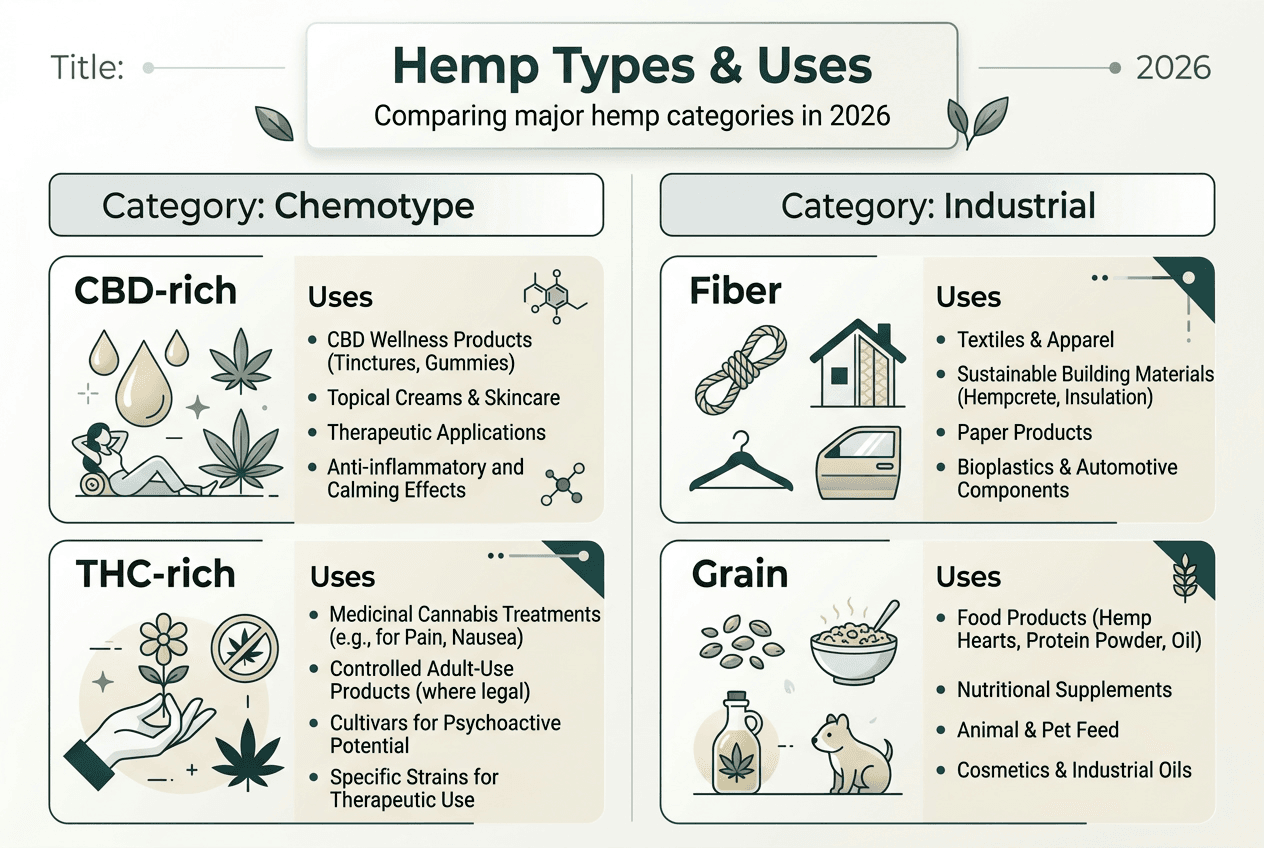
Hemp plants produce dozens of cannabinoids, but their ratios create distinct chemical profiles called chemotypes. Hemp chemotypes are categorized into five primary groups based on cannabinoid profiles including THC, CBD, and CBG. These classifications help growers, processors, and consumers predict how a plant or product will behave.
Chemotype I plants produce predominantly THC, making them the traditional marijuana varieties that deliver psychoactive effects. Chemotype II represents balanced ratios of THC and CBD, offering moderate effects with some intoxication. Chemotype III is CBD dominant with minimal THC, the most common legal hemp type used for wellness products. Chemotype IV focuses on CBG production with low levels of both THC and CBD. Chemotype V, sometimes called the null type, produces negligible amounts of all major cannabinoids.
All cannabinoids originate from cannabigerolic acid (CBGa), the mother molecule that enzymes convert into THCA, CBDA, or CBCA through biosynthesis pathways. Chemotype expression follows Mendelian inheritance patterns, with specific loci controlling cannabinoid production. This genetic control means breeders can predict offspring traits and stabilize desired chemotypes across generations.
The distinction between THCA and THC matters enormously for legal compliance and user experience. Raw hemp contains THCA, the non-intoxicating acid form that only converts to psychoactive THC through heat exposure or decarboxylation. This is why THCA and THC differences affect product formulation, testing protocols, and legal status. A plant might test under 0.3% THC when raw but exceed limits after processing.
Pro Tip: When reviewing lab reports for hemp products, check whether results show THCA or total THC (THCA converted to THC equivalent). This distinction reveals the product’s true potency after consumption.
Key chemotype characteristics include:
- Chemotype I: 95%+ THC, minimal CBD, produces strong psychoactive effects
- Chemotype II: Balanced THC and CBD ratios, moderate effects with therapeutic potential
- Chemotype III: 95%+ CBD, trace THC, non-intoxicating wellness applications
- Chemotype IV: CBG dominant, emerging research interest for unique benefits
- Chemotype V: Negligible cannabinoids, primarily used for fiber or seed production
Understanding these chemotypes empowers you to select products aligned with your intended use. If you want non-intoxicating wellness support, chemotype III CBD-dominant hemp delivers. For legal recreational experiences, you need products from plants bred to maximize allowable THC while staying under federal limits.
Industrial hemp types and agricultural uses in the U.S.
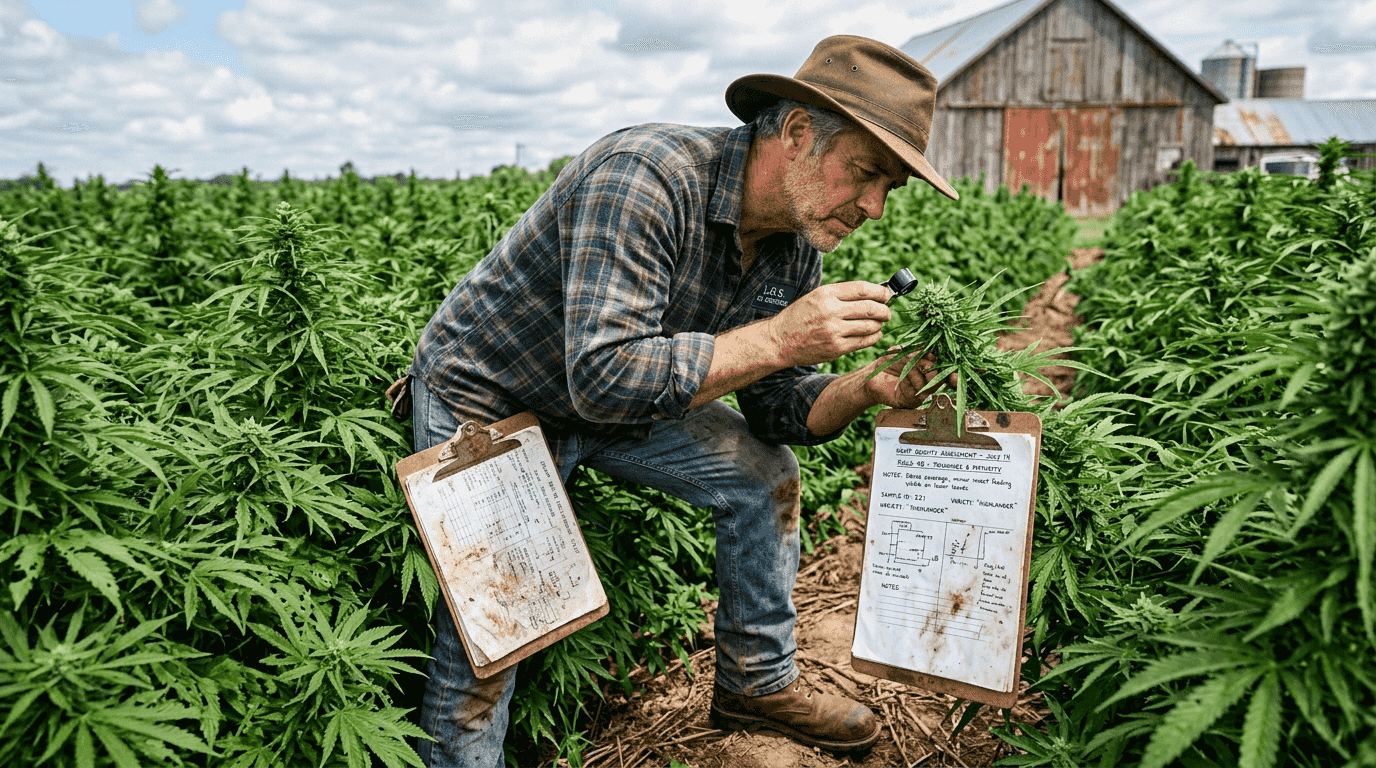
Beyond cannabinoid profiles, hemp types split by agricultural purpose into fiber, grain, and cannabinoid production categories. Each demands different cultivars, growing conditions, and harvest timing. Industrial hemp is grown for fiber, grain, and cannabinoids with cultivars like Futura 83 performing well for grain yield.
Fiber-type hemp grows tall and dense with minimal branching, maximizing stalk biomass for textiles, construction materials, and paper products. These cultivars typically reach 10 to 15 feet in height and are harvested before full maturity to maintain fiber quality. Seed or grain hemp varieties produce abundant seeds rich in protein and omega fatty acids for food, oil, and animal feed. Cannabinoid-rich hemp focuses on flower production, requiring more spacing, careful nutrient management, and precise harvest timing to optimize resin content while maintaining legal THC levels.
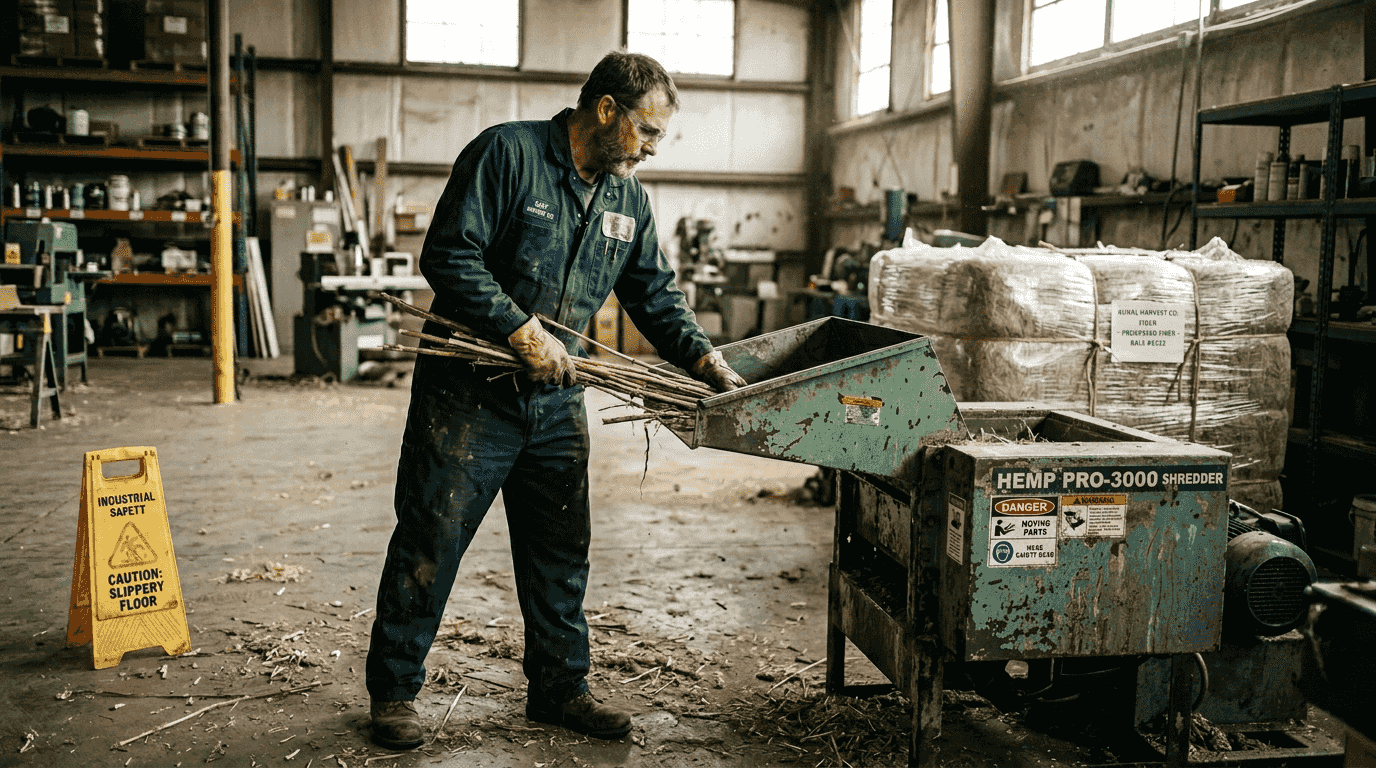
Fiber-type cultivars like Jinma show high biomass and fiber yields; dual-purpose cultivars like Futura 83 balance early flowering and yield. Futura 83 originated in France and adapts well to various U.S. climates, producing both usable fiber and grain. Other notable cultivars include Finola for grain, Joey for cannabinoid production, and Fedora 17 for dual fiber and seed purposes.
Yield data reveals significant performance differences across hemp types:
| Hemp Type | Example Cultivar | Primary Output | Typical Yield | Growing Season |
|---|---|---|---|---|
| Fiber | Jinma | Stalk biomass | 6 to 10 tons per acre | 90 to 120 days |
| Grain | Finola | Seeds | 800 to 1200 pounds per acre | 85 to 100 days |
| Cannabinoid | Cherry Wine | Flower/resin | 1000 to 2000 pounds per acre | 90 to 110 days |
| Dual-purpose | Futura 83 | Fiber and grain | 4 to 6 tons fiber, 600 to 900 pounds grain | 100 to 130 days |
Breeding considerations differ dramatically between these categories. Fiber hemp breeders select for height, stalk strength, and low branching. Grain hemp requires early maturity, uniform seed development, and shattering resistance. Cannabinoid hemp demands high resin production, disease resistance, and stable chemotype expression under varying environmental conditions.
Economic factors influence which hemp type farmers choose. Fiber hemp requires specialized processing equipment that remains scarce in the U.S., limiting market access. Grain hemp competes with established oilseed crops and needs food-grade handling infrastructure. Cannabinoid hemp offers higher per-acre revenue potential but demands more labor, faces stricter regulatory testing, and experiences volatile market pricing.
Pro Tip: If you’re sourcing hemp products for wellness, ask whether the source material came from dedicated cannabinoid cultivars or dual-purpose varieties. Cannabinoid-focused genetics typically deliver more consistent potency and terpene profiles.
For consumers interested in hemp vs marijuana differences, understanding agricultural types clarifies why hemp products vary so widely in quality and effects. Industrial fiber hemp produces minimal cannabinoids, while purpose-bred cannabinoid cultivars deliver the compounds consumers seek for wellness and recreation.
Key industrial hemp distinctions include:
- Fiber hemp: Tall, dense growth for biomass; harvested early for optimal fiber quality
- Grain hemp: Seed-focused varieties with high oil and protein content for food applications
- Cannabinoid hemp: Flower production prioritized; requires careful THC management and testing
- Dual-purpose hemp: Balanced traits allowing both fiber and grain harvest from single crop
The agricultural diversity within hemp demonstrates why blanket assumptions about “hemp products” mislead consumers. A CBD oil from cannabinoid-specific genetics differs fundamentally from extracts derived from dual-purpose industrial cultivars.
Legal definitions and evolving regulations for hemp in 2026
Legal frameworks create sharp boundaries between hemp and marijuana despite their botanical similarity as Cannabis sativa varieties. The legal definition of hemp is cannabis with less than 0.3% delta-9 THC by dry weight per the 2018 Farm Bill. This arbitrary threshold determines whether a plant enjoys legal protection or faces controlled substance classification.
The 2018 Farm Bill removed hemp from the Controlled Substances Act, enabling industry growth. That legislation transformed hemp from a prohibited crop into an agricultural commodity, spurring rapid expansion of cultivation, processing, and product development. The 0.3% THC limit originated from a 1976 taxonomic paper by Canadian researchers Ernest Small and Arthur Cronquist, who acknowledged the threshold was arbitrary and not based on intoxication potential.
By 2026, regulatory landscapes have shifted again. The 2025 H.R. 5371 law tightens hemp definitions and reclassifies many intoxicating hemp products as Schedule I controlled substances effective November 2026. This legislation responds to concerns about delta-8 THC, THC-O, and other synthetic or semi-synthetic cannabinoids derived from legal hemp but producing intoxicating effects.
The new regulations establish several critical compliance requirements:
- Hemp must contain less than 0.3% total THC (including THCA converted to THC equivalent) on a dry weight basis
- Intoxicating hemp-derived cannabinoids face Schedule I classification unless specifically exempted
- Products marketed for intoxication cannot claim hemp exemption regardless of source material
- States retain authority to impose stricter limits or prohibit hemp cultivation entirely
- Testing protocols must account for total THC potential, not just delta-9 THC in raw form
Legal hemp versus marijuana comparison:
| Characteristic | Legal Hemp | Marijuana |
|---|---|---|
| THC content | Less than 0.3% total THC | Exceeds 0.3% total THC |
| Federal status | Legal under Farm Bill | Schedule I controlled substance |
| Cultivation | Permitted with state licenses | Prohibited federally, some state exceptions |
| Interstate commerce | Allowed for compliant products | Prohibited |
| Intoxication potential | Minimal to none in raw form | Psychoactive effects |
These distinctions create practical challenges for producers and consumers. Hemp plants can exceed legal THC limits due to genetics, environmental stress, or delayed harvest timing. Hemp producers must manage THC accumulation and harvest timing to comply with federal limits and product safety. A field testing at 0.25% THC one week might hit 0.35% the next, transforming a legal crop into prohibited marijuana requiring destruction.
State-level regulations add complexity. Some states prohibit hemp cultivation entirely despite federal legalization. Others impose stricter THC limits, additional testing requirements, or ban specific product types like smokable hemp flower. Understanding legal THC limits in your jurisdiction prevents unintentional violations.
The 2026 regulatory environment emphasizes several enforcement priorities. Authorities target products marketed for intoxication, synthetic cannabinoids, and mislabeled goods claiming hemp status while exceeding THC limits. Consumers should verify that products carry current compliance documentation and come from reputable sources adhering to updated hemp legal status requirements.
Pro Tip: When purchasing hemp products in 2026, request third-party lab results showing total THC content and verify the test date. Regulations now require total THC reporting, not just delta-9 THC, to capture THCA and other THC analogs.
Practical distinctions and choosing hemp products for wellness and recreation
Understanding hemp types translates into smarter product selection for your specific wellness or recreational goals. Hemp-type cannabis contains predominantly non-intoxicating cannabinoids like CBD, preferred for wellness. The chemotype, cultivation method, and processing approach all influence the final product’s effects and quality.
CBD-dominant hemp products (chemotype III) deliver non-intoxicating benefits many users seek for stress management, sleep support, and physical recovery. These products contain minimal THC, eliminating concerns about psychoactive effects or failed drug tests in most cases. Balanced chemotype II products offer moderate CBD and THC ratios, providing subtle effects with therapeutic potential for users in states allowing higher THC content.
THC content dramatically affects user experience. Products from chemotype I or high-THC hemp varieties produce noticeable psychoactive effects, while chemotype III CBD products feel non-intoxicating. For hemp for recreation, consumers seek products maximizing legal THC content while maintaining compliance.
Interpreting product labeling requires attention to several key details:
- Total cannabinoid content: Look for milligrams per serving and per container
- Cannabinoid spectrum: Full-spectrum includes all plant compounds; broad-spectrum removes THC; isolate contains single cannabinoids
- THC reporting: Verify whether labels show delta-9 THC only or total THC including THCA
- Third-party testing: Reputable products include batch-specific lab results for potency and contaminants
- Harvest and processing dates: Fresher products maintain better cannabinoid stability and terpene profiles
Harvest timing significantly impacts cannabinoid profiles. Hemp producers must manage THC accumulation and harvest timing to comply with federal limits and product safety. Early harvest yields lower total cannabinoid content but reduces THC risk. Late harvest maximizes cannabinoid production but increases the chance of exceeding legal THC limits, potentially requiring crop destruction.
Processing methods also alter final cannabinoid ratios. Decarboxylation converts THCA to active THC, increasing potency and psychoactive potential. Extraction techniques using CO2, ethanol, or hydrocarbons capture different cannabinoid and terpene profiles. Distillation and isolation refine extracts to specific cannabinoid targets, removing unwanted compounds but potentially sacrificing the entourage effect.
Consumer tips for selecting hemp types:
- For non-intoxicating wellness: Choose chemotype III CBD-dominant products with less than 0.3% total THC
- For legal recreational use: Seek products from compliant high-THC hemp cultivars within 2026 regulations
- For balanced effects: Consider chemotype II products where legally available
- For specific cannabinoids: Look for CBG, CBN, or other minor cannabinoid products from specialized chemotypes
- For quality assurance: Verify third-party lab testing, appropriate storage, and recent production dates
Pro Tip: The entourage effect suggests that whole-plant hemp extracts with diverse cannabinoids and terpenes may deliver enhanced benefits compared to isolated compounds. If you want maximum therapeutic potential, choose full-spectrum or broad-spectrum products over isolates.
Understanding these practical distinctions helps you navigate the complex hemp marketplace confidently. Rather than assuming all hemp products deliver similar effects, you can match specific chemotypes, processing methods, and cannabinoid profiles to your wellness or recreational objectives.
Explore quality hemp products and resources at 23rd State
Now that you understand how hemp types differ by chemotype, agricultural purpose, and legal classification, you can make informed choices about products that match your needs. 23rd State offers a curated selection of high-quality hemp products designed for wellness and recreation, all compliant with 2026 federal regulations. Whether you’re exploring CBD-dominant options for non-intoxicating benefits or seeking legal THC products within current limits, the platform provides transparent lab testing and detailed product information.
Explore educational resources that dive deeper into legal THC limits and discover how different hemp types serve various purposes through guides on hemp for recreation. The combination of quality products and reliable information helps you navigate the evolving hemp landscape with confidence in 2026.
Frequently asked questions
What is the main difference between hemp and marijuana?
Hemp legally contains less than 0.3% total THC by dry weight under federal law, while marijuana exceeds that threshold and produces psychoactive effects. Both are varieties within the Cannabis sativa species, differing primarily in THC content and legal status rather than botanical classification. Understanding hemp vs marijuana differences helps consumers recognize why products from each category deliver distinct experiences and face different regulatory frameworks.
How do hemp chemotypes impact product effects?
CBD-dominant chemotypes (type III) are non-intoxicating and commonly used for wellness applications like stress management and physical recovery. THC-dominant chemotypes (type I) produce psychoactive effects and face stricter regulation, though some high-THC hemp products remain legal under the 0.3% limit. Balanced chemotypes (type II) offer moderate effects with both CBD and THC present, while CBG-dominant types (type IV) provide emerging research interest for unique therapeutic potential. Learning about THCA and THC differences clarifies how raw versus activated cannabinoids affect product potency and user experience.
What legal changes in 2026 should hemp consumers be aware of?
The 2025 passage of H.R. 5371 narrows hemp’s federal definition and reclassifies many intoxicating hemp-derived products as Schedule I controlled substances effective November 2026. This legislation targets synthetic and semi-synthetic cannabinoids like delta-8 THC and THC-O that previously existed in regulatory gray areas. Consumers must watch for changes impacting product availability, labeling requirements, and compliance standards. Staying current with hemp legal status helps you avoid purchasing products that may become prohibited or face enforcement action under tightened regulations.
Can industrial hemp grown for fiber contain significant cannabinoids?
Industrial fiber hemp typically produces minimal cannabinoid content because breeders select these cultivars for stalk biomass rather than resin production. While fiber hemp technically contains CBD and trace cannabinoids, concentrations remain far below levels found in purpose-bred cannabinoid cultivars. Extracting cannabinoids from fiber hemp yields lower quality and potency compared to dedicated cannabinoid genetics. For wellness or recreational purposes, products should come from hemp specifically cultivated for cannabinoid content rather than dual-purpose or fiber varieties.
How can I verify that hemp products comply with 2026 regulations?
Request third-party lab results showing total THC content (including THCA converted to THC equivalent) and verify the test date matches recent production batches. Reputable brands provide certificates of analysis (COAs) with each product, listing cannabinoid potency, terpene profiles, and contaminant testing for pesticides, heavy metals, and microbials. Check that products clearly label their cannabinoid content in milligrams per serving and disclose whether they use full-spectrum, broad-spectrum, or isolate formulations. Avoid products making health claims beyond general wellness support or those marketed explicitly for intoxication, as these may violate current regulations.