


Recent clinical research demonstrates that microdosing THC at just 500 micrograms effectively reduces chronic pain without causing intoxication. This surprisingly low dose challenges common assumptions that THC always produces a strong high. Microdosing involves consuming 1-5 mg of THC to achieve subtle wellness benefits like pain relief, anxiety reduction, and improved focus while maintaining full functionality. This guide explores how to select appropriate doses, understand different product types, personalize your approach, and safely incorporate THC microdosing into your wellness routine.
Table of Contents
- Selection Criteria For Effective THC Microdosing
- Understanding THC Microdosing And Dosage Guidelines
- Health And Wellness Benefits Of Microdosing THC
- Methods And Products For Microdosing THC
- Personalizing Microdosing: Dosage And Adjustment Strategies
- Safety And Precautions When Microdosing THC
- Situational Use Cases And Recommendations
- Explore Premium THC Microdosing Products At 23rd State
- Frequently Asked Questions
Key Takeaways
| Point | Details |
|---|---|
| Microdosing Range | Therapeutic doses of 1-5 mg THC provide benefits without strong intoxication. |
| Pain Relief | Studies show 500 micrograms can effectively reduce chronic pain with minimal side effects. |
| Product Variety | Tinctures, edibles, vaporizers, and inhalers offer different onset times and dose control. |
| Start Low Protocol | Begin with 1 mg and increase gradually in 0.5-1 mg increments while tracking effects. |
| Safety Considerations | Individuals with substance use history or severe anxiety should avoid microdosing. |
Selection Criteria for Effective THC Microdosing
Choosing the right microdosing approach requires understanding several key factors that influence safety and effectiveness. Optimal therapeutic microdosing ranges from 1-5 mg THC, significantly lower than typical recreational doses of 10-20 mg. This precision matters because you want subtle benefits without impairment.
Dose accuracy stands as the foundation of successful microdosing. Select products with clear THC content labeling and consistent potency across batches. Your personal tolerance and existing health conditions significantly affect how you respond to even small doses.
Product selection should align with your lifestyle needs. Different delivery methods influence onset speed and duration of effects. Understanding cannabis microdose basics helps you match products to daily routines.
Before starting any microdosing regimen, verify your local legal status. THC regulations vary dramatically across jurisdictions. Some areas permit medical use only, while others allow recreational access or prohibit THC entirely.
Key selection factors include:
- Precise dose measurement capability
- Product consistency and lab testing verification
- Onset time matching your schedule
- Effect duration suitable for your goals
- Legal compliance in your location
Pro Tip: Choose products or devices offering dosing increments of 1 mg or less. This precision lets you fine tune your ideal dose through gradual adjustment. Following a structured hemp microdosing workflow ensures consistent results.
Understanding THC Microdosing and Dosage Guidelines
Microdosing THC involves consuming 1 to 5 milligrams to induce subtle effects without strong psychoactive impact. This approach contrasts sharply with standard recreational doses that often exceed 10 mg. The goal centers on achieving functional benefits while avoiding intoxication that interferes with daily activities.
These minimal doses still interact with your endocannabinoid system. They can modulate pain signals, influence mood regulation, and affect cognitive function. The key difference lies in magnitude, you experience gentle adjustments rather than overwhelming sensations.
The “start low, go slow” principle serves as the golden rule for microdosing initiation. Begin with just 1 mg of THC to assess your individual sensitivity. Some people respond strongly to minimal amounts, while others require slightly higher doses for noticeable effects.
Your metabolism and chosen consumption method dramatically influence how THC affects you. Edibles undergo liver processing, which converts THC into a more potent form and delays onset. Sublingual tinctures enter your bloodstream more directly. Vaporizing delivers the fastest effects.
Dosage progression guidelines:
- Start with 1 mg THC for initial assessment
- Wait full onset period before considering adjustment
- Increase by 0.5-1 mg increments only if needed
- Allow 2-3 days between dose increases
- Track effects carefully in a journal
Patience becomes critical, especially with edibles that take 30-90 minutes for onset. Consuming additional doses prematurely leads to accidental overconsumption. Review microdose product selection to understand timing differences. Learning about microdosed THC drinks reveals why beverage formats offer unique advantages for controlled dosing.
Health and Wellness Benefits of Microdosing THC
Scientific research increasingly supports the therapeutic potential of THC microdosing across multiple wellness domains. Clinical studies demonstrate that 500 microgram doses reduce chronic pain with minimal side effects. This finding revolutionizes pain management by offering relief without sedation or cognitive impairment.
Mental wellness benefits emerge at these low doses as well. Microdosing supports calm mood and anxiety reduction without the paranoia sometimes associated with higher THC intake. Many users report improved emotional balance and stress resilience.
Cognitive enhancement represents another advantage. Subtle THC doses can sharpen focus and boost creativity for daily tasks. Rather than causing mental fog, appropriate microdoses help some people maintain sustained attention and generate novel ideas.
Sleep quality improvements occur without heavy sedation. Users often fall asleep more easily and experience better sleep continuity. You wake feeling refreshed rather than groggy, unlike outcomes from larger THC amounts.
Documented wellness benefits:
- Mild anxiety reduction and mood stabilization
- Enhanced focus and creative thinking
- Effective pain relief at very low doses
- Improved sleep onset and quality
- Maintained daily functionality and alertness
The balanced nature of these benefits makes microdosing appealing for wellness integration. You can work, drive, and engage in complex tasks while experiencing subtle therapeutic effects. Exploring benefits of low dose THC reveals the biological mechanisms behind these outcomes.
Pro Tip: Monitor your effects across different times of day. Morning microdoses might enhance focus, while evening doses support relaxation. Adjust timing based on desired outcomes. Understanding THC infused wellness benefits helps optimize your approach.
Methods and Products for Microdosing THC
Different delivery methods offer distinct advantages and limitations for microdosing. Understanding these differences helps you select products matching your lifestyle and wellness goals. Consumption methods vary significantly in onset time and duration.
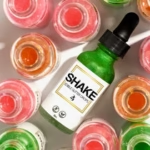
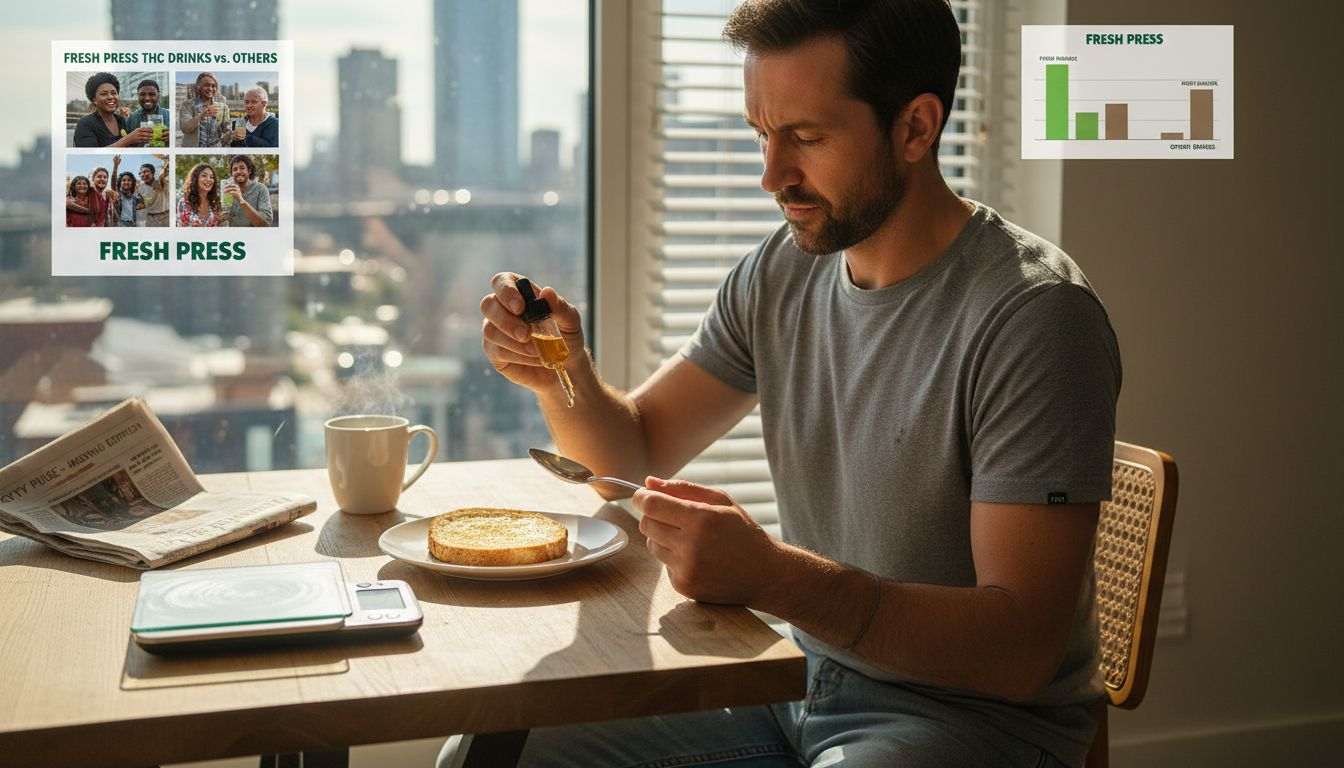
Tinctures deliver THC sublingually through tissues under your tongue. This route provides moderate onset of 15-45 minutes with good dose control. You can measure precise amounts using the dropper and adjust easily.
Edibles process through your digestive system and liver. Onset takes 30-90 minutes, but effects last significantly longer, up to 6+ hours. This extended duration suits sustained relief needs but requires patience to avoid redosing too soon.
Vaporizing produces the fastest onset, within seconds to minutes. This immediacy allows easy dose titration by taking small inhalations. However, effects wear off more quickly than other methods.
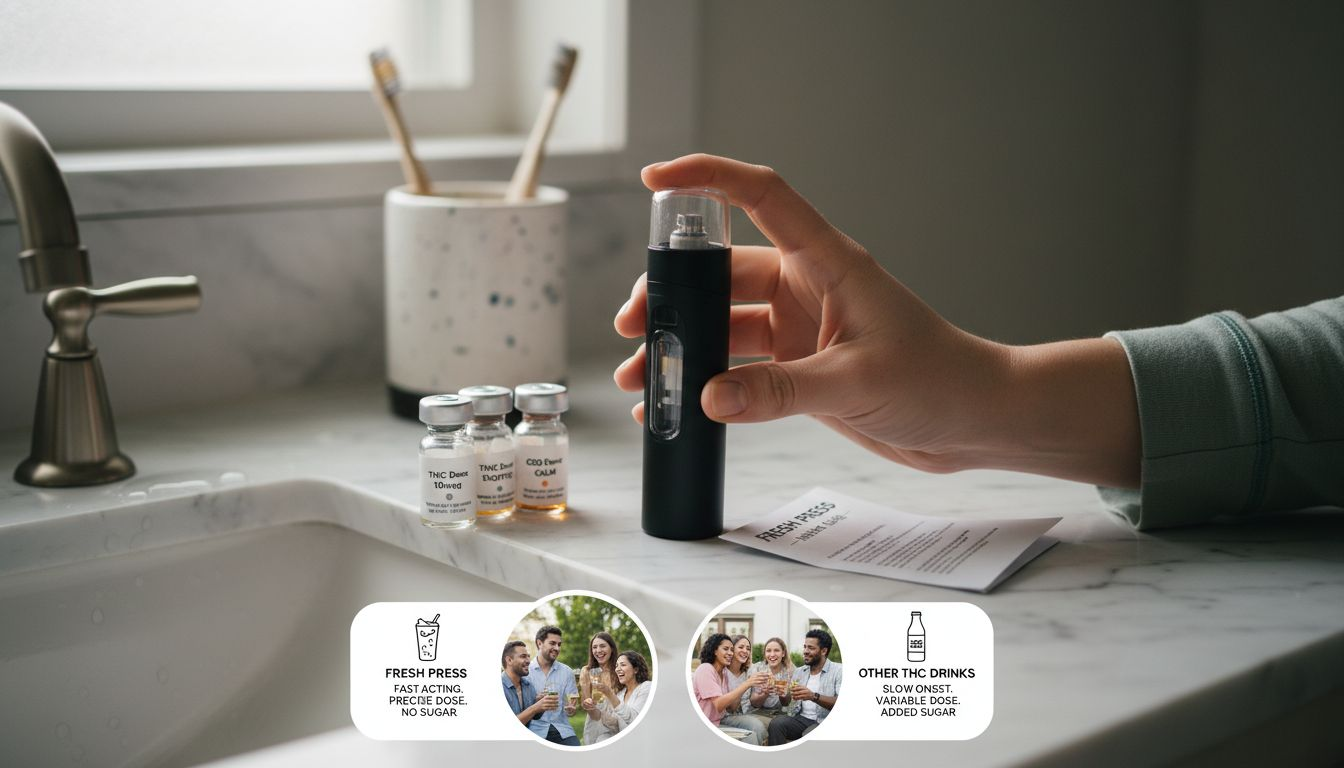
Selective dose inhalers deliver precise microgram doses as low as 500 mcg with high bioavailability. Medical studies use these devices for pain management research due to their exceptional accuracy.
| Method | Onset Time | Duration | Dose Control | Best For |
|---|---|---|---|---|
| Tinctures | 15-45 min | 4-6 hours | Excellent | Gradual effects, easy adjustment |
| Edibles | 30-90 min | 6-8+ hours | Good | Sustained relief, sleep support |
| Vaporizing | Seconds-5 min | 2-4 hours | Moderate | Rapid relief, dose titration |
| Inhalers | 5-15 min | 3-5 hours | Excellent | Precise dosing, clinical use |
Product considerations:
- Tinctures suit beginners needing dose flexibility
- Edibles provide longest lasting effects
- Vaporizers offer immediate feedback
- Inhalers deliver clinical precision
Your choice should reflect when you need effects to begin and how long you want them to last. Compare THC edibles options to understand formulation differences. Deciding between THC gummies versus drinks depends on your onset preferences and lifestyle factors.
Personalizing Microdosing: Dosage and Adjustment Strategies
Successful microdosing requires personalization through careful observation and gradual adjustment. Your optimal dose differs from others based on genetics, tolerance, and wellness goals. Starting at 1 mg and gradually increasing helps achieve benefits while minimizing unwanted effects.
Begin your journey conservatively to establish your baseline response. This initial test reveals your sensitivity level and helps prevent uncomfortable experiences. Some individuals feel noticeable effects at 1 mg, while others require 3-5 mg.
Timing between doses matters as much as the amount consumed. Respect the onset window for your chosen method. Edibles demand the longest wait, up to 90 minutes before you can accurately assess effects.
Systematic tracking transforms guesswork into data driven optimization. Record your dose, timing, method, and observed effects for each session. Note both benefits and any adverse reactions.
Personalization steps:
- Begin with 1 mg THC regardless of consumption method
- Wait the full expected onset time for your product type
- Document effects in a dedicated journal or app
- Increase by only 0.5-1 mg if initial dose proves insufficient
- Allow 2-3 days between dose adjustments for accurate assessment
- Establish frequency based on your specific wellness goals
- Consult healthcare providers if you experience concerning effects
Your ideal dose emerges through this methodical process. Some people find their sweet spot at 2 mg, others at 4 mg. There is no universal perfect dose. Following a structured microdosing workflow ensures consistent progress toward your optimal regimen.
Safety and Precautions When Microdosing THC
While microdosing offers wellness benefits, certain precautions protect your health and legal standing. Individuals with substance use disorder history face higher risks and should avoid THC microdosing or seek medical guidance first. Those with severe anxiety vulnerability may experience worsening symptoms rather than relief.
Legal considerations remain paramount. THC legal status varies dramatically by jurisdiction, with some locations permitting use and others imposing criminal penalties. Verify your local regulations before purchasing or consuming any THC products.
Product quality directly impacts safety outcomes. Choose items with transparent lab testing showing exact THC content and absence of contaminants. Clear labeling prevents accidental overdosing and ensures consistent experiences.
Timing discipline prevents the most common microdosing mistake. Edible onset delays require patience to avoid consuming additional doses too quickly. This patience protects you from unintentionally strong intoxication.
Critical safety guidelines:
- Verify legal compliance before purchasing products
- Choose lab tested items with clear THC labeling
- Avoid microdosing with substance use or anxiety disorders
- Wait recommended onset times before additional dosing
- Store products securely away from children and pets
- Discontinue use if adverse effects occur
- Never drive or operate machinery until effects are fully known
Monitor yourself for unwanted reactions during initial microdosing trials. Mild discomfort may indicate your dose exceeds your ideal amount. Severe reactions warrant immediate discontinuation and medical consultation. Understanding low dose THC safety principles helps you navigate microdosing responsibly.
Situational Use Cases and Recommendations
Different wellness goals benefit from specific microdosing approaches. Matching your method and dose to intended outcomes maximizes effectiveness. Typical 1-5 mg microdoses support calm, focus, and mild anxiety relief without strong intoxication.
For rapid relief needs, vaporizing stands out. Immediate onset lets you assess effects quickly and titrate your dose upward if necessary. This method suits acute situations like sudden stress or pain flares.
Sustained effects favor edibles. Their extended duration makes them ideal for sleep support or all day mood stabilization. Consume them 60-90 minutes before your target effect time.
Precise pain management benefits most from selective dose inhalers. These devices deliver exact microgram amounts, enabling fine tuned relief. Their medical grade accuracy suits chronic pain conditions.
Beginners often succeed with tinctures or low dose capsules. These formats offer controlled dosing and moderate onset, reducing the risk of overwhelming experiences. You can start very low and adjust incrementally.
Use case recommendations:
- Anxiety relief: 1-3 mg via tincture or edible
- Focus enhancement: 1-2 mg via tincture in morning
- Pain management: 2-5 mg via inhaler or vaporizer
- Sleep support: 2-4 mg via edible 60-90 minutes before bed
- Mood stabilization: 1-3 mg via capsule or tincture
| Goal | Recommended Method | Typical Dose | Timing |
|---|---|---|---|
| Rapid anxiety relief | Vaporizer | 1-2 mg | As needed |
| Daytime focus | Tincture | 1-2 mg | Morning |
| Chronic pain | Inhaler | 2-5 mg | 2-3x daily |
| Sleep improvement | Edible | 2-4 mg | 60-90 min before bed |
Your lifestyle constraints also influence optimal choices. Discreet dosing at work favors capsules or tinctures over vaporizers. Quick onset needs during busy days suit vaporizing. Learning about THC infused wellness items reveals additional product categories. Comparing gummies and drinks clarifies which edible format matches your preferences.
Explore Premium THC Microdosing Products at 23rd State
Now that you understand microdosing principles and techniques, finding quality products becomes your next step. 23rd State curates premium THC infused items specifically designed for precise microdosing. Our selection includes tinctures, edibles, and beverages formulated to deliver consistent, controlled doses that align with the wellness approaches described throughout this guide.
Every product undergoes rigorous lab testing to verify potency and purity. Clear labeling shows exact THC content, enabling the accurate dosing essential for successful microdosing. Whether you seek wellness focused cannabis benefits or exploring THC infused wellness advantages, our educational resources and product guides support your journey. Discover why choosing infused edibles from 23rd State ensures both safety and effectiveness in your microdosing practice.
Frequently Asked Questions
What is THC microdosing?
THC microdosing involves consuming very small amounts of tetrahydrocannabinol, typically 1-5 milligrams per dose, to achieve therapeutic benefits without significant intoxication. This approach allows you to experience subtle effects like pain relief, reduced anxiety, improved focus, and better sleep while maintaining full functionality for work and daily activities. Microdosing differs fundamentally from recreational cannabis use, which often involves 10-20 mg or more and produces noticeable psychoactive effects. The goal centers on finding your minimum effective dose that provides wellness benefits without impairment.
How do I know if my microdose is working?
Effective microdosing produces subtle improvements in your target area without obvious intoxication. You might notice reduced pain intensity, calmer mood, better focus, or easier sleep onset depending on your goal. These changes feel gentle rather than dramatic. If you experience strong psychoactive effects like altered perception or significant cognitive impairment, your dose exceeds microdosing range. Patience matters because some methods take up to 90 minutes for full effects. Keeping a detailed journal helps you track patterns and recognize subtle benefits you might otherwise miss.
Can microdosing THC cause addiction?
Microdosing at 1-5 mg doses carries lower addiction risk compared to regular higher dose use, but risk is not zero. Individuals with personal or family history of substance use disorders face elevated vulnerability and should avoid THC microdosing or consult addiction specialists before starting. Responsible dosing practices, avoiding daily use unless medically indicated, and regular monitoring minimize dependency potential. If you find yourself increasing doses frequently, using more often than intended, or feeling unable to stop, these signal problematic use requiring professional support.
What is the best method to microdose THC for beginners?
Tinctures and low dose capsules offer the most beginner friendly microdosing experience. These formats provide excellent dose control, allowing you to start at 1 mg and adjust gradually. Tinctures offer flexibility to measure exact amounts, while capsules provide consistent pre measured doses. Both have moderate onset times of 15-45 minutes, giving you time to assess effects without the rapid intensity of vaporizing. Edibles work well too but require more patience due to 30-90 minute onset delays. Avoid vaporizing initially because rapid onset makes dose control more challenging when you are still learning your tolerance.