


TL;DR:
- Proper pairing and consistent routines are key to maximizing hemp’s health benefits.
- Always verify product quality through third-party lab reports and Certificates of Analysis.
- Small behavioral adjustments, like dosing and meal pairing, significantly improve hemp’s effectiveness.
Most Americans who use hemp products never get the full picture. They sprinkle a few seeds on their yogurt, grab a random CBD oil off the shelf, and wonder why the results feel underwhelming. The truth is, hemp’s nutritional and therapeutic potential is real, but it’s easy to leave most of it on the table through common, fixable mistakes. Poor absorption, untested products, and inconsistent routines quietly drain the value from every dose. This guide walks you through exactly what to do differently, from choosing the right products to pairing them correctly, so you can finally get the results that drew you to hemp in the first place.
Table of Contents
- What you need to maximize hemp benefits
- Step-by-step: How to use hemp for maximum nutrition
- Step-by-step: How to maximize CBD and low-THC hemp extract effects
- How to verify product purity, safety, and results
- Our take: What most miss about maximizing hemp benefits
- Take your next step with quality hemp choices
- Frequently asked questions
Key Takeaways
| Point | Details |
|---|---|
| Pair hemp with high-fat foods | Combining hemp extracts with high-fat meals dramatically improves absorption for stronger effects. |
| Prioritize third-party tested products | Always choose hemp products with a Certificate of Analysis to guarantee quality and safety. |
| Consistent daily use boosts results | Including hemp seeds or oil daily ensures steady nutrition and maximizes wellness benefits over time. |
| Monitor dosage and take breaks | Start low with CBD/THC products, slowly adjust, and use tolerance breaks to maintain long-term effects safely. |
What you need to maximize hemp benefits
Before you get into routines and recipes, it helps to understand what you’re actually working with. Hemp comes in several forms, and each one serves a different purpose for your wellness goals.
The main hemp product types and their strengths:
- Hemp seeds (hemp hearts): Rich in complete protein, omega-3 and omega-6 fatty acids, magnesium, and zinc. Ideal for daily nutrition benefits and long-term wellness support.
- Hemp seed oil: Cold-pressed from seeds, great for cooking and skin support. Not the same as CBD oil.
- CBD oil and tinctures: Extracted from hemp flowers and leaves. Used for stress relief, sleep, and targeted wellness.
- Low-THC hemp extracts: Full-spectrum or broad-spectrum products with trace THC (under 0.3%). Understanding the difference between THC vs. CBD helps you choose the right extract for your goals.
Evidence-based serving sizes at a glance:
| Product | Suggested daily serving | Primary benefit |
|---|---|---|
| Hemp seeds | 2-3 tablespoons | Protein, omegas, minerals |
| Hemp seed oil | 1-2 tablespoons | Healthy fats, skin support |
| CBD tincture | 10-25 mg | Stress, sleep, relaxation |
| Low-THC extract | Start at 2.5-5 mg | Mild recreational, calm |
For best nutritional results, consume 2-3 tablespoons of hemp seeds or two tablespoons of hemp oil daily for protein, omega-3/6, and key minerals.
Product quality is non-negotiable. Look for brands that publish Certificates of Analysis (COAs), which are third-party lab reports confirming what’s actually in the product. Store hemp seeds and oil in the refrigerator to prevent rancidity. Use measuring spoons for accuracy, especially with oils and tinctures.
Pro Tip: Pair hemp oil or CBD tinctures with a meal that contains healthy fats like avocado, eggs, or nuts. Fat dramatically boosts how much CBD your body absorbs.
Step-by-step: How to use hemp for maximum nutrition
With your products ready, here’s how to build a daily hemp nutrition routine that actually sticks.
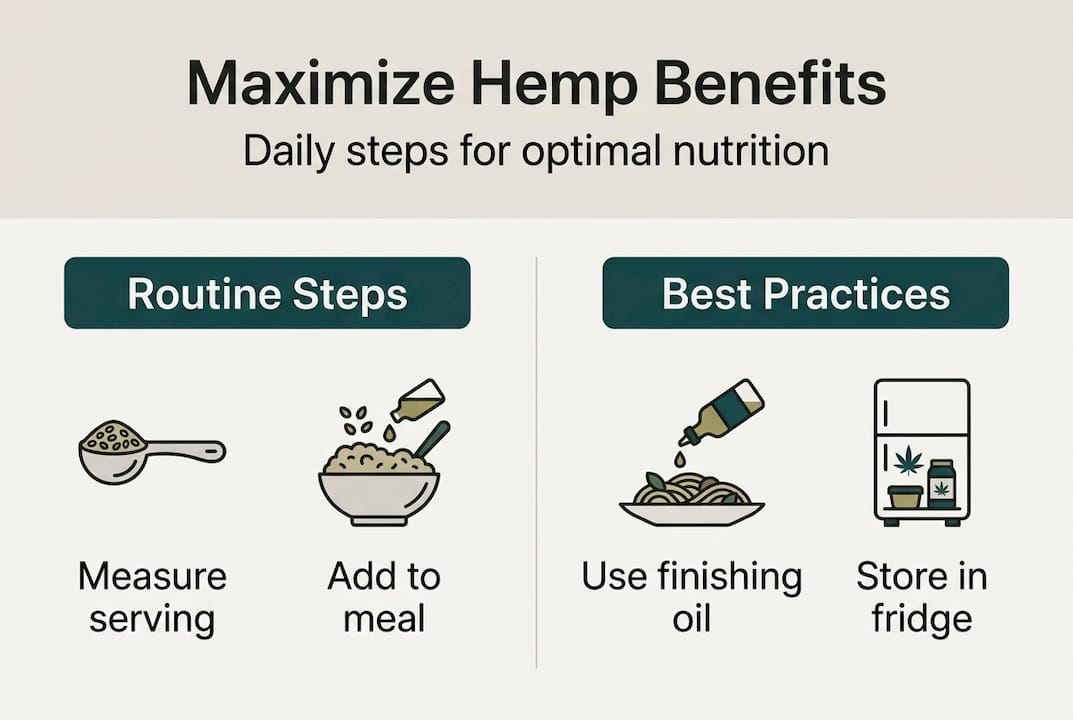
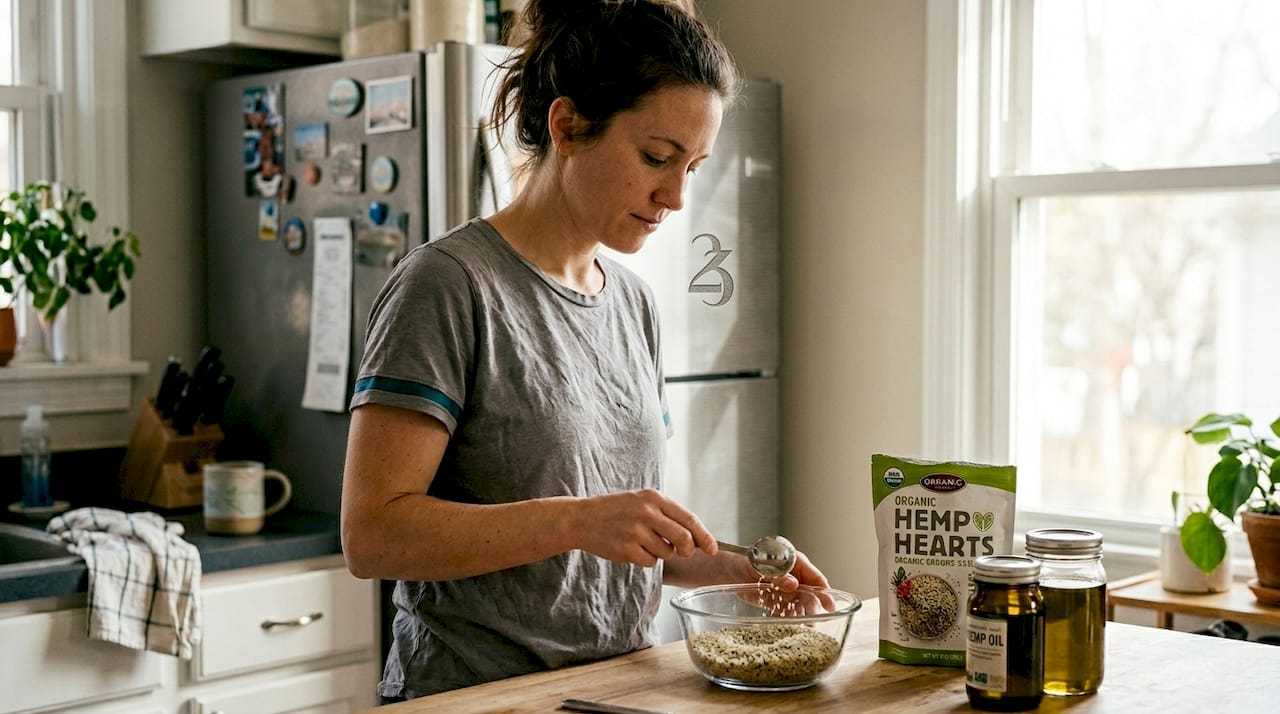
1. Measure your serving before you eat. Eyeballing leads to inconsistency. Use a tablespoon to portion out 2-3 tablespoons of hulled hemp hearts. Consuming this amount daily delivers 10g of complete protein, the ideal omega-3/6 ratio, and key minerals for cardiovascular and inflammatory health, making it one of the most efficient plant-based nutrition moves you can make.
2. Add hemp seeds to a morning anchor food. Smoothies, oatmeal, and yogurt are the easiest vehicles. Hemp hearts blend invisibly into smoothies and add a subtle, nutty richness to oatmeal. You barely notice them, but your body does.
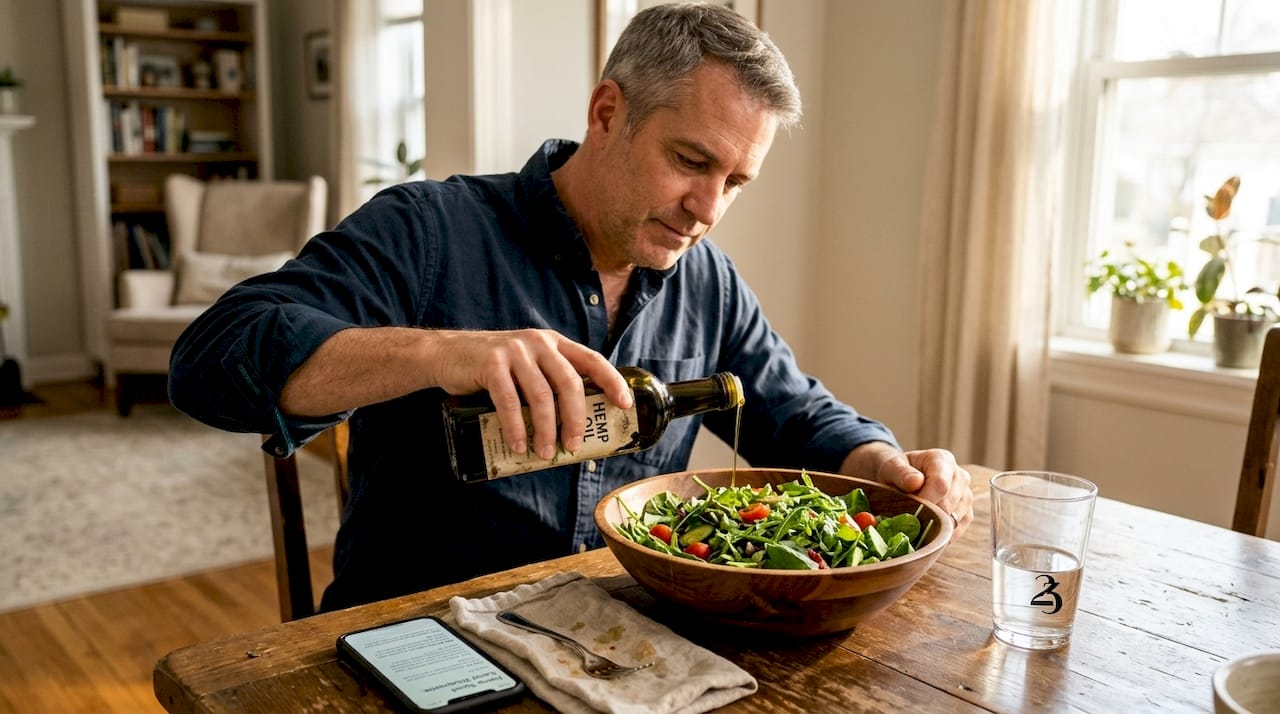
3. Use hemp oil as a finishing oil, not a cooking oil. High heat destroys its delicate fatty acids. Drizzle it over salads, grain bowls, or roasted vegetables after cooking. One to two tablespoons goes a long way.
4. Store correctly every time. Keep hemp seeds and oil in the fridge, sealed tightly. Opened hemp oil oxidizes within weeks at room temperature, which ruins both the flavor and the nutritional benefits. Shelf life in the fridge is typically three to six months for oil and up to a year for seeds.
5. Track how you feel over two to four weeks. Nutritional benefits from hemp are cumulative. Energy, digestion, and skin texture are common early wins. Hemp is also a gentle option for hemp for skin support when consumed regularly.
Troubleshooting common issues:
| Issue | Fix |
|---|---|
| Earthy taste | Mix into smoothies or yogurt to mask it |
| Loose stools | Start with 1 tablespoon and increase gradually |
| Suspected allergy | Stop use and consult a doctor |
Pro Tip: Rotate how you use hemp each week. Try seeds in oatmeal one week, oil in a dressing the next. Variety keeps the habit fresh and prevents boredom from killing your routine.
Step-by-step: How to maximize CBD and low-THC hemp extract effects
CBD and low-THC extracts require a more intentional approach than hemp seeds. Here’s how to get the most from them.
1. Start low and go slow. Begin at 10-25 mg of CBD daily, or 2.5-5 mg for low-THC products. Taking CBD with high-fat meals increases absorption 4-17 times, and starting at 10-25 mg daily is best practice. Don’t rush to a higher dose before giving your current one two full weeks.
2. Choose your method based on your goal. Sublingual (under the tongue) tinctures absorb in 15-45 minutes and last four to six hours. Oral edibles take 60-120 minutes but last six to eight hours. If you’re exploring CBD for relaxation, a sublingual tincture before a stressful event is often more predictable than an edible.
3. Always pair with a high-fat meal. This single habit can make a bigger difference than doubling your dose. Think eggs, nut butter, avocado, or full-fat yogurt alongside your CBD.
4. Know the difference between CBD vs THC extracts. Full-spectrum products contain trace THC and the full range of hemp compounds, which many find more effective. Isolate products contain only CBD. If you’re curious about THC formulas and how they compare, the spectrum matters for both effects and drug testing.
5. Plan tolerance breaks. Tolerance breaks of 21 days are recommended for preventing dependency with regular low-THC recreational use. Even a few days off every month helps maintain sensitivity.
Onset and duration comparison:
| Method | Onset time | Duration |
|---|---|---|
| Sublingual tincture | 15-45 minutes | 4-6 hours |
| Oral edible | 60-120 minutes | 6-8 hours |
| Capsule | 45-90 minutes | 5-7 hours |
Safety note: Avoid high-THC hemp extracts if you are pregnant, nursing, under 21, or have a history of psychosis or anxiety disorders. Always consult your doctor before starting any hemp extract regimen if you take prescription medications.
How to verify product purity, safety, and results
Knowing how to use hemp is only half the equation. You also need to know what’s actually in your product.
Only 30% of CBD products are accurately labeled, so always check for third-party testing and Certificates of Analysis. That number is sobering, and it means the odds are not in your favor without doing a little homework first.
How to read a COA:
- Find the COA on the brand’s website or by scanning the QR code on the packaging.
- Confirm the CBD content matches the label within a 10% margin.
- Check that THC is below 0.3% for federally legal hemp products.
- Look for pesticide, heavy metal, and solvent residue panels. All should show “ND” (not detected) or values below legal limits.
- Verify the lab is accredited and independent, not owned by the brand.
Use our guide to check hemp quality for a deeper breakdown of what each COA panel means. You can also review hemp safety basics before your next purchase.
Quick safety checklist before every purchase:
- COA is current (within the last 12 months)
- Lab is third-party and accredited
- CBD and THC levels match the label
- No missing panels for pesticides or heavy metals
- Price is reasonable (suspiciously cheap products are a red flag)
- Brand has clear contact info and a return policy
For a side-by-side breakdown of brands and formats, the compare hemp products guide and hemp shopping checklist are great next reads.
Drug interaction warning: CBD inhibits CYP450 liver enzymes, which process many common medications including blood thinners, antidepressants, and anticonvulsants. If you take any prescription drugs or have liver issues, talk to your doctor before using CBD or hemp extracts.
Our take: What most miss about maximizing hemp benefits
Here’s something we see constantly: people buy a decent hemp product, use it inconsistently, skip the meal pairing, and then conclude that hemp doesn’t work for them. That’s not a hemp problem. That’s a habit problem.
The biggest missed opportunity isn’t the product itself. It’s the small, repeatable behaviors around it. Most users underdose, skip the fat pairing, or rotate through untested brands looking for a bargain. None of that builds the consistent tissue levels that make hemp’s benefits actually show up.
We also think the “natural equals safe” assumption does real harm. Natural doesn’t automatically mean effective or risk-free. Data-driven choices, like reading COAs and understanding choosing hemp for wellness, are what separate users who get results from those who stay frustrated.
Full-spectrum products work better for many people, but they carry trace THC, which matters for drug testing. Know your context before you choose.
Pro Tip: Consistency and small tweaks, like adding fat to your CBD dose or refrigerating your oil, often drive the biggest long-term benefits. Don’t chase the next product. Optimize what you already have.
Take your next step with quality hemp choices
You’ve got the knowledge. Now it’s about putting it to work with products you can actually trust. Quality hemp choices don’t have to be complicated, but they do require intention. From reading COAs to pairing your CBD with the right meal, every small decision compounds over time into real, noticeable results.

At 23rd State, we’ve built our resources around helping you make those decisions confidently. Whether you’re new to hemp or refining a routine you’ve had for years, our guides, product education, and curated selections are designed to meet you where you are. Explore our full library of wellness tips, safety guides, and vetted hemp products to keep your journey moving in the right direction.
Frequently asked questions
What is the optimal daily serving of hemp seeds for nutrition?
The optimal daily serving is 2-3 tablespoons of hulled hemp hearts, which provides around 10 grams of complete protein and key omega fats. Daily use of 2-3 tablespoons supports heart, skin, and overall wellness.
How should I take CBD oil for best absorption?
Take CBD oil with a high-fat meal to increase absorption significantly. CBD absorption is 4-17 times higher with high-fat meals compared to taking it on an empty stomach.
How can I confirm a hemp product is safe and genuine?
Always check for a third-party Certificate of Analysis (COA) showing test results for CBD, THC, and purity. COA and third-party testing confirm hemp product quality, since most CBD products are mislabeled.
Do tolerance breaks matter with hemp products?
Yes, a 21-day break is recommended if you use low-THC hemp regularly to reset tolerance and avoid dependence. 21 days is recommended for a full tolerance reset with regular low-THC use.
Is hemp safe for everyone to use?
Most people tolerate hemp well, but those with liver impairment or on medications should consult a doctor due to possible drug interactions. Those with liver impairment or clinical drug interactions should use caution with CBD and hemp extracts.